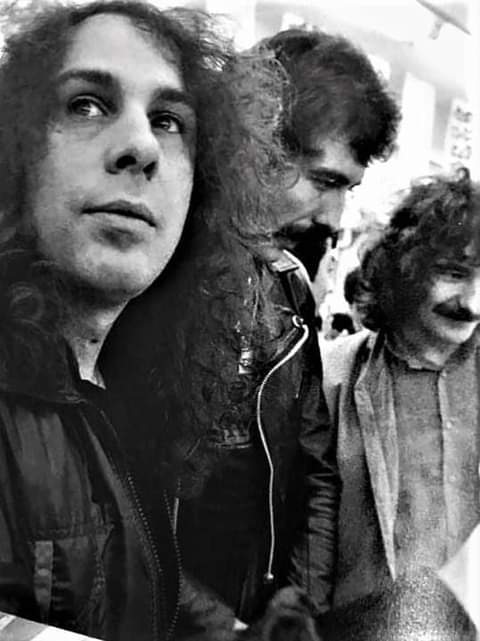
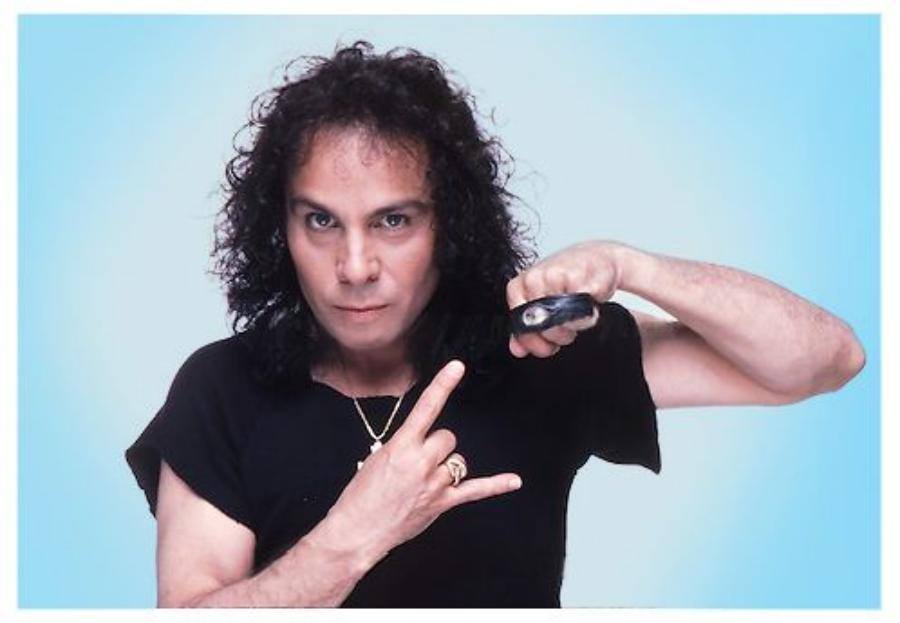
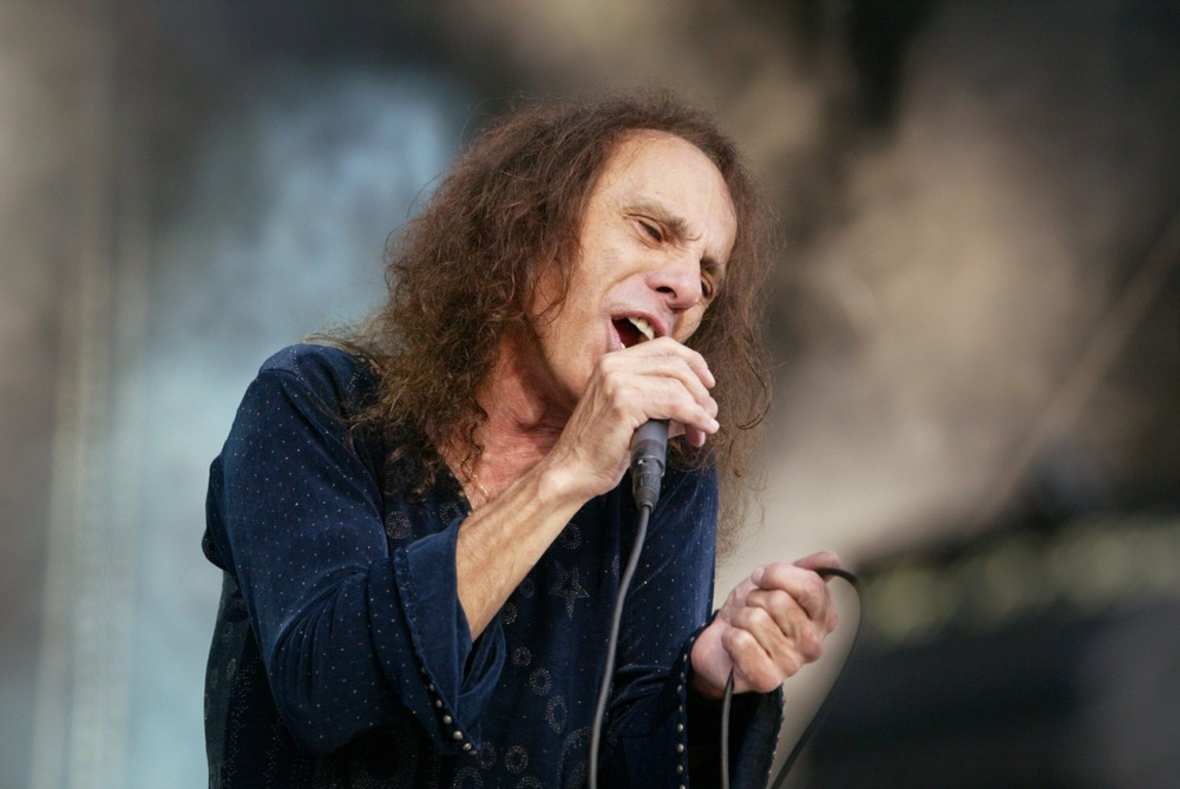
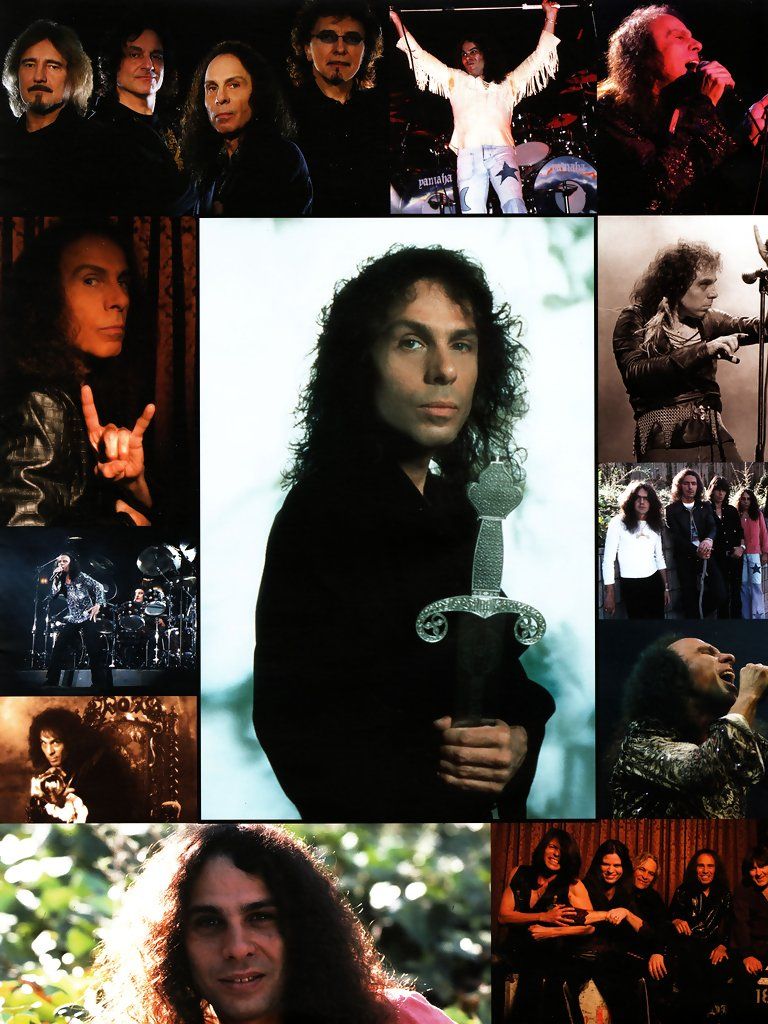
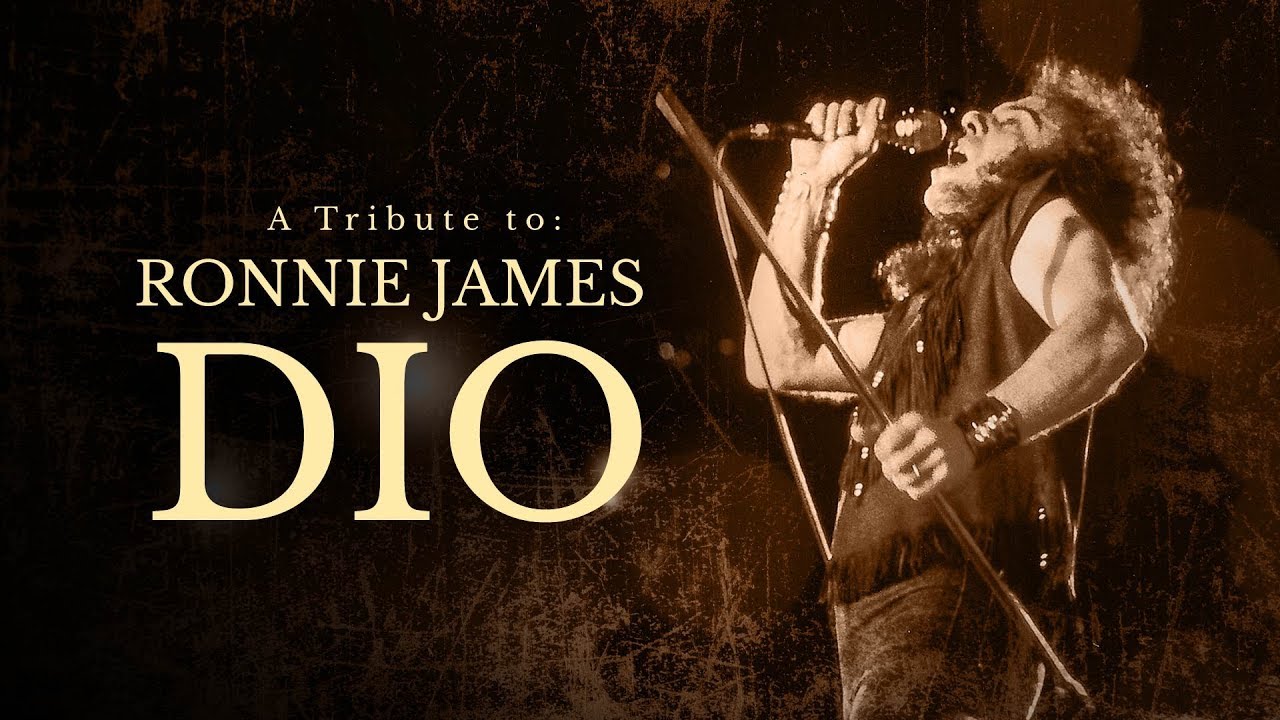
Ronald James Padavona (July 10, 1942 – May 16, 2010), known professionally as Ronnie James Dio, was an American Heavy metal singer. He fronted numerous bands throughout his career, including Elf, Rainbow, Black Sabbath, Dio and Heaven & Hell.
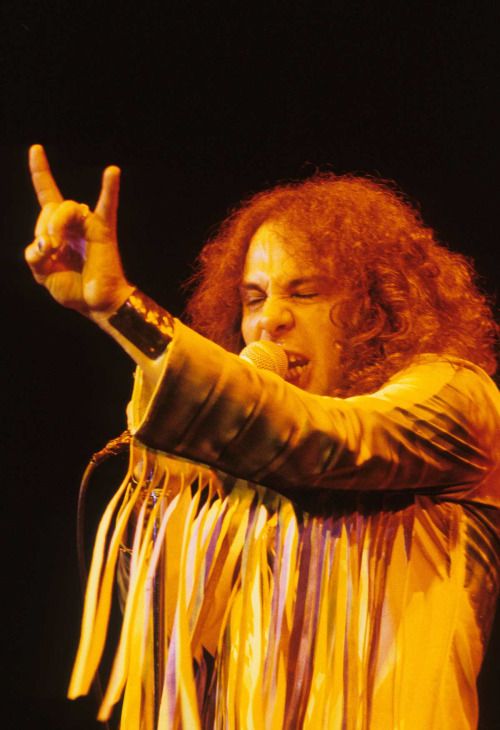
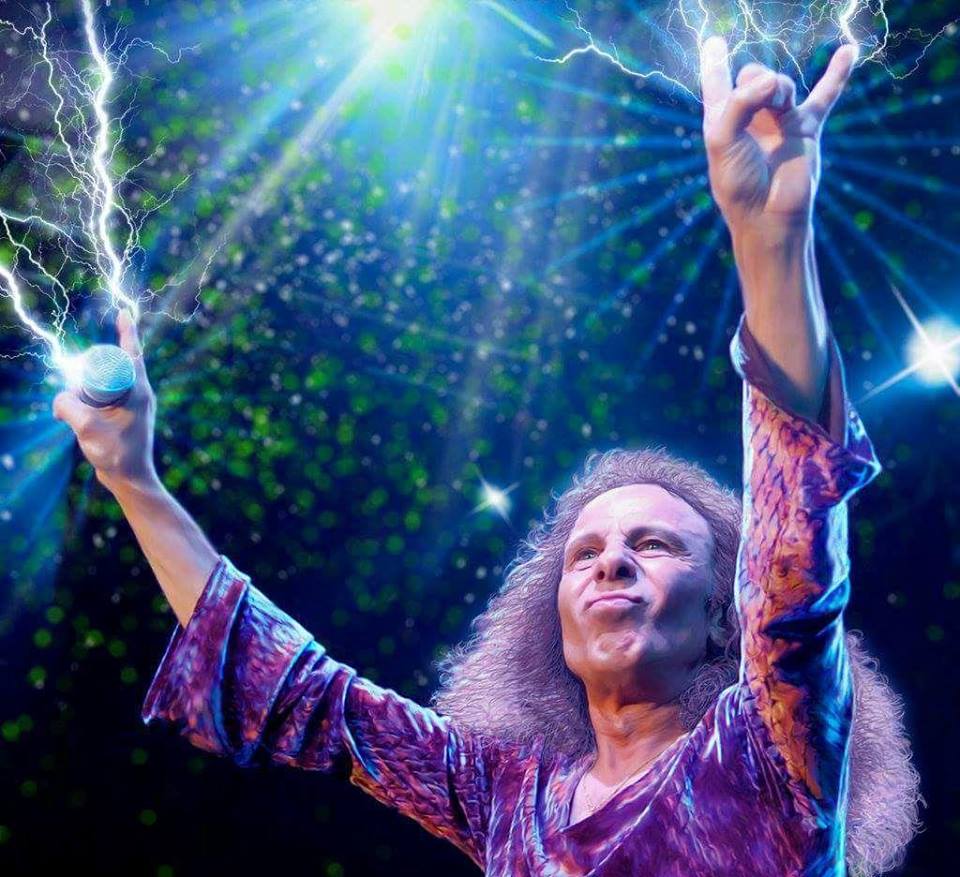
Dio is regarded as one of the greatest and most influential heavy metal vocalists of all time. He is known for popularizing the "devil horns" hand gesture in metal culture and his medieval-themed song lyrics. According to a version provided by the singer himself, the act derives directly from the classic Italian apotropaic gesture, which his grandmother often displayed. Dio had a powerful, versatile vocal range and was capable of singing both hard rock and lighter ballads. He was awarded the "Metal Guru Award" by Classic Rock Magazine in 2006. He was also named the "Best Metal Singer" at the Revolver Golden Gods Awards in 2010 and ranked as the genre's best vocalist in 2013 by music journalist Sacha Jenkins.
Early life
Ronnie James "Dio" Padavona was born in Portsmouth, New Hampshire, to Italian-American parents Patrick and Anna from Cortland, New York. His family moved to Portsmouth from Cortland as part of his father's service in the U.S. Army during World War II, and they resided there for only a short time before returning to Cortland. Ronnie listened to a great deal of Opera while growing up and was influenced vocally by American tenorMario Lanza.
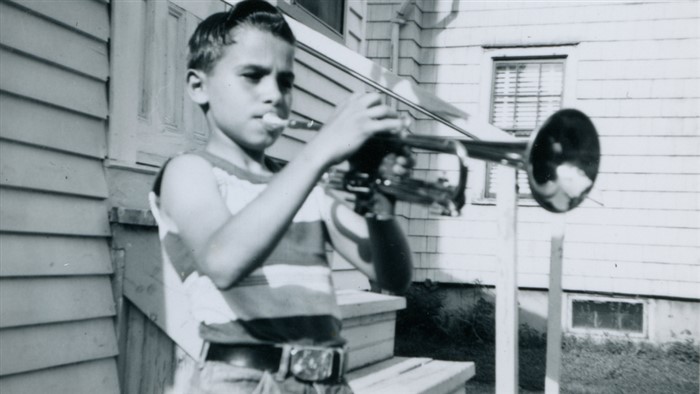
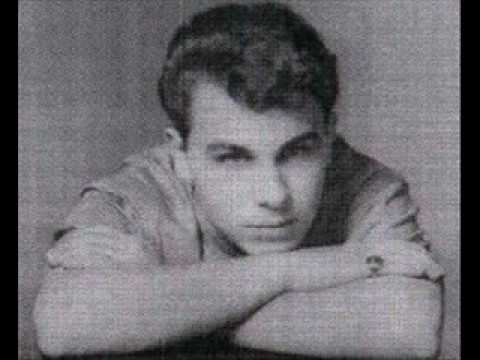
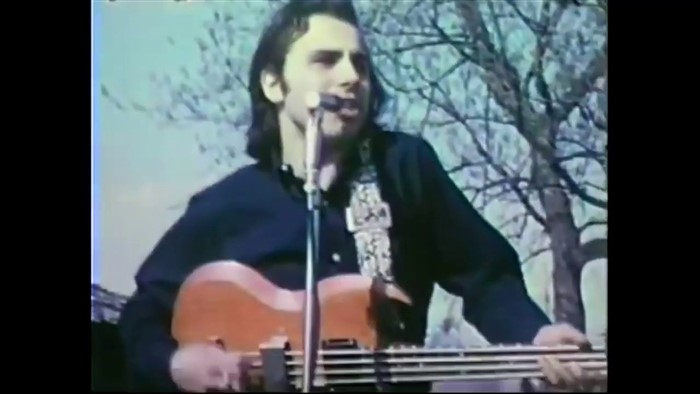
His first formal musical training began at age 5, learning to play the trumpet. It was during high school that Ronald Padavona formed his first Rock 'n' Roll group, The Vegas Kings, which would later be named Ronnie and the Rumblers and then Ronnie and the Red Caps. Though Padavona began his rock 'n' roll career on trumpet, he added singing to his skill set and also assumed bass guitar duties for the groups.
Ronald Padavona graduated from Cortland High School in 1960. He was allegedly offered a scholarship to the prestigious Juilliard School of Music but did not take up the offer due to his interest in Rock music. He instead attended the State University of New York (SUNY) at Buffalo to major in pharmacology. There, he played trumpet in the university's concert band; however, he only attended the university from 1960 to 1961 and did not graduate. Then he enrolled at Cortland State College but dropped out as well. In a 2000 interview, he stated that he majored in history and minored in English.
Despite being known for his powerful singing voice, Ronald Padavona claimed to have never received any vocal training. He instead attributed his singing ability to the use of breathing techniques he learned while playing trumpet.
Early career
Dio's musical career began in 1957, when he and several Cortland, New York, musicians formed the band The Vegas Kings. The group's lineup consisted of Dio on bass guitar, Billy DeWolfe on lead vocals, Nick Pantas on guitar, Tom Rogers on drums and Jack Musci on saxophone. The band changed its name to Ronnie and the Rumblers. In 1958, the band again changed its name to Ronnie and the Redcaps. Musci left the band in 1960 and a new guitarist, Dick Botoff, joined the lineup. The band released two singles: The first single was "Conquest"/"Lover" with the A-side being an instrumental track reminiscent of the Ventures and the B-side featuring Billy DeWolfe on lead vocals. The second was "An Angel Is Missing"/"What'd I Say" featuring Dio on lead vocals for both tracks.
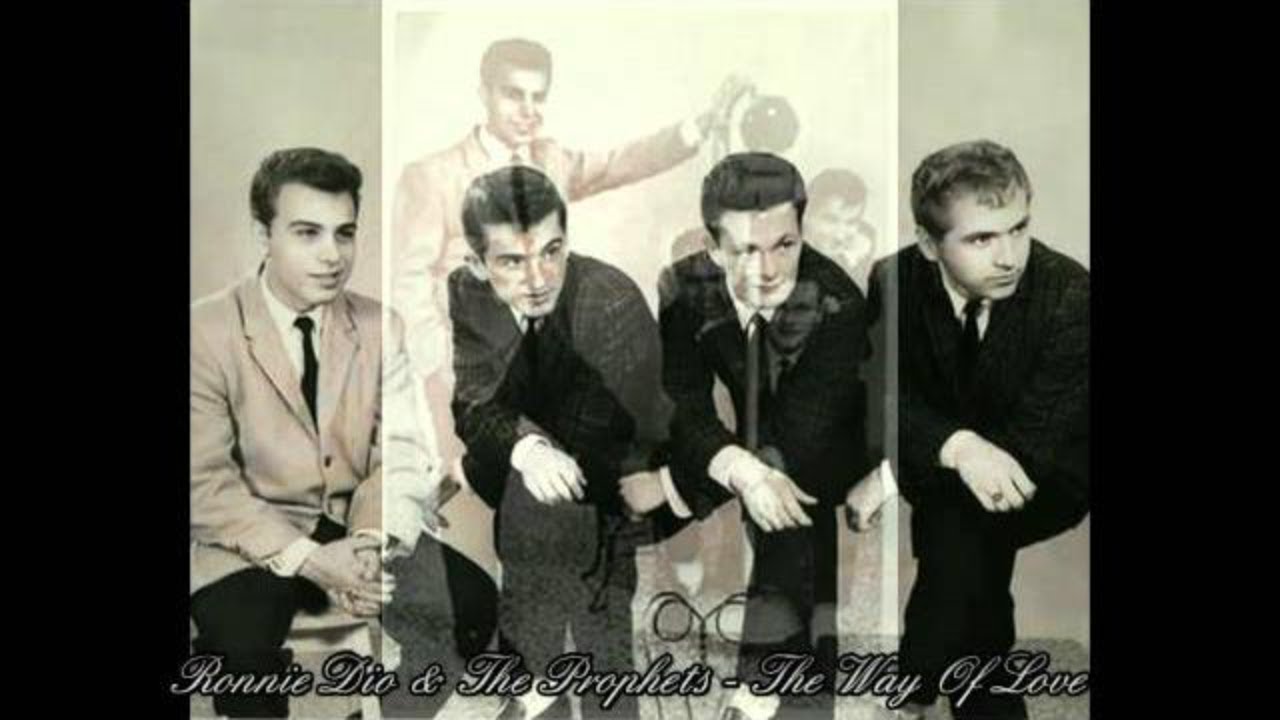
Explanations vary for how Ronald Padavona adopted the stage name "Dio". One is that Padavona's grandmother said he had a gift from God and should be called "Dio" ("God" in Italian), although this was disputed by Ronnie's widow, Wendy, in a February 2017 interview. Another is that Dio was a reference to mafia member Johnny Dio; this explanation was confirmed in his autobiography. Ronald Padavona first used the name on a recording in 1960, when he added it to the band's second release on Seneca. Soon after that, the band modified its name to Ronnie Dio and the Prophets.
Early career
The Prophets lineup lasted for several years, touring throughout New York and playing college fraternity parties. They produced one single for Atlantic Records and one album. Some of the singles (such as "Mr. Misery," released on Swan) were labeled as being by Ronnie Dio as a solo artist, even if the rest of the Prophets contributed to the recording. The group released several singles during the following years until early 1967. Dio continued to use his birth name on any songwriting credits on those releases.
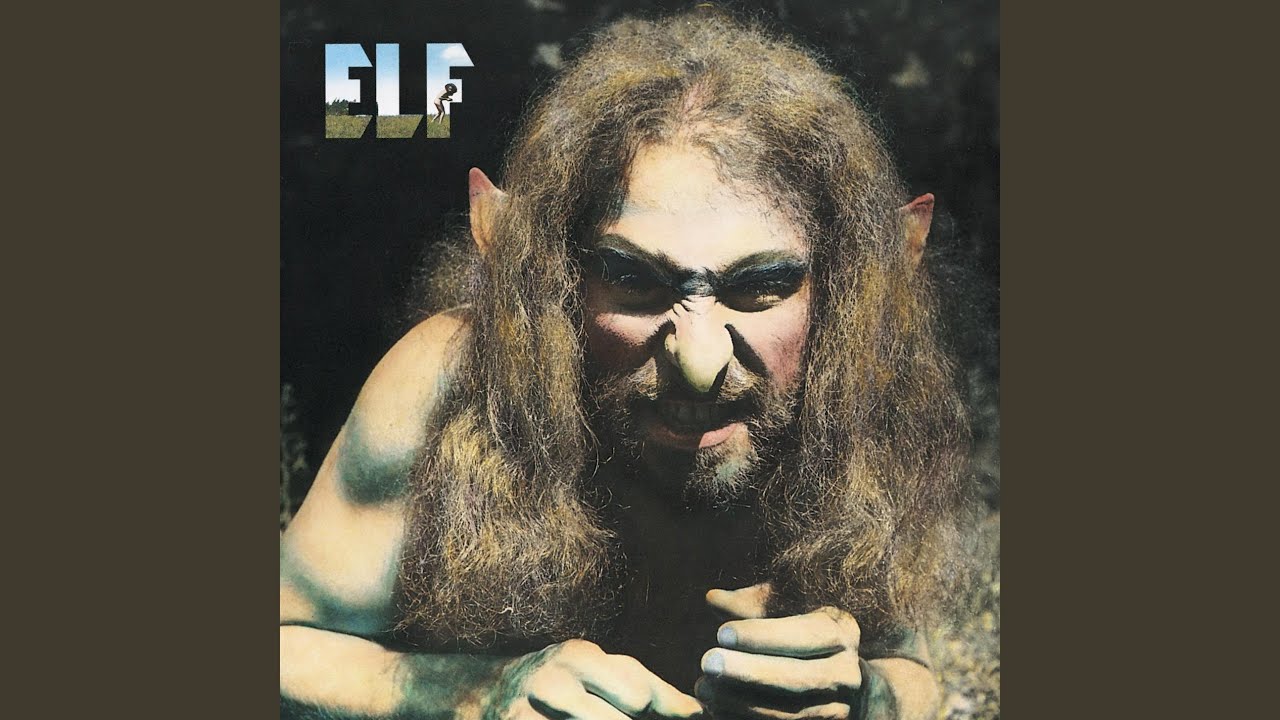
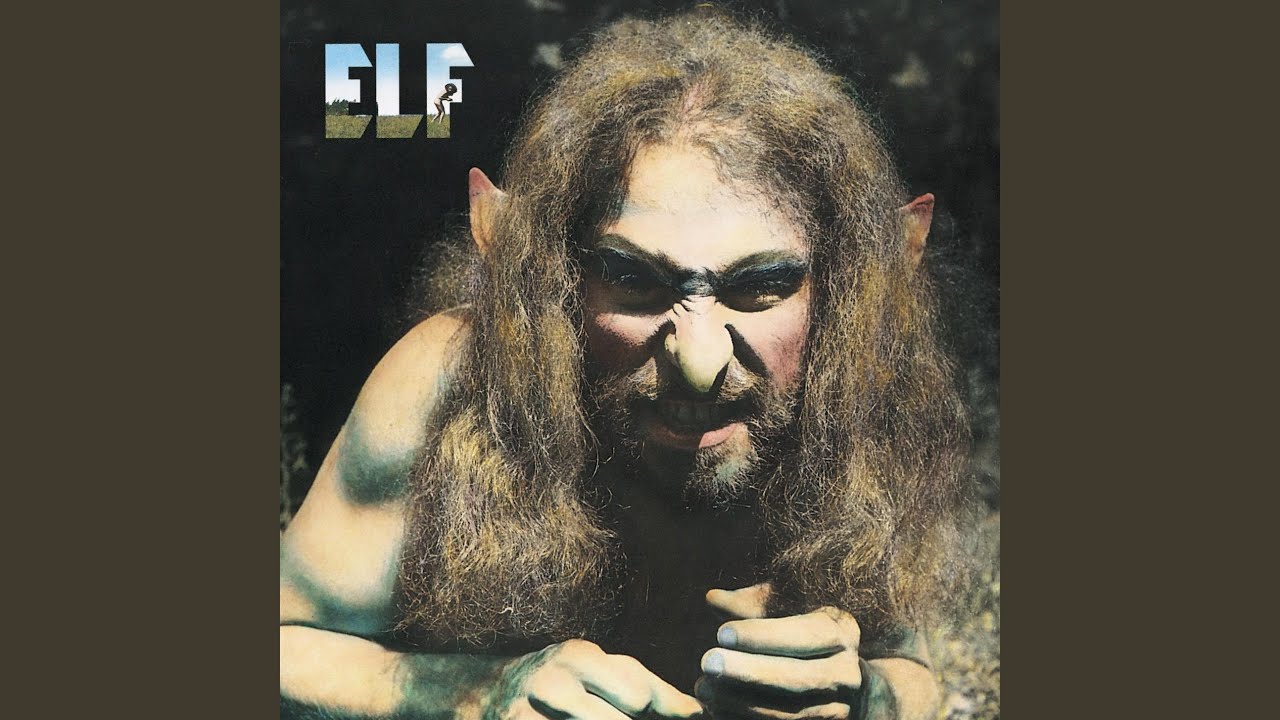
In late 1967, Ronnie Dio and the Prophets transformed into a new band called The Electric Elves and added a keyboard player. In February 1968, the band was involved in a fatal car accident that killed guitarist Nick Pantas and briefly put Dio and the other band members in hospital. Following the accident, the group shortened its name to the Elves and used that name until mid-1972, when it released its first proper album under the name Elf.
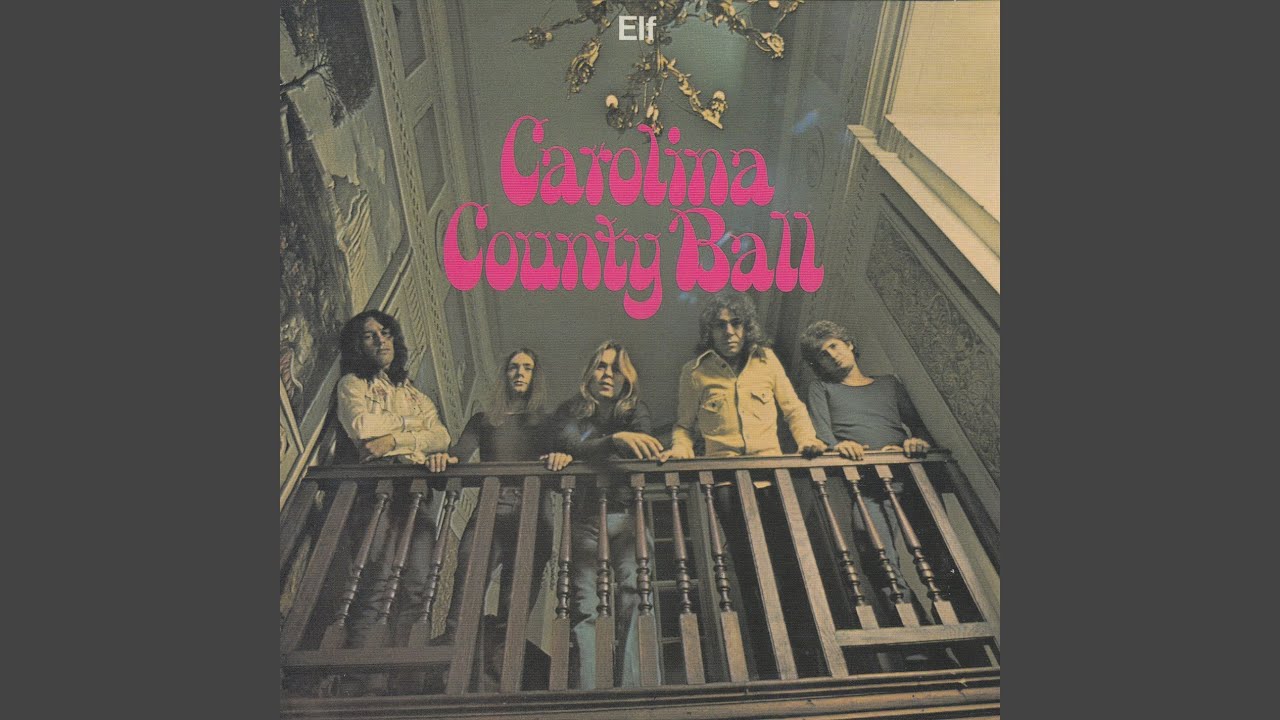
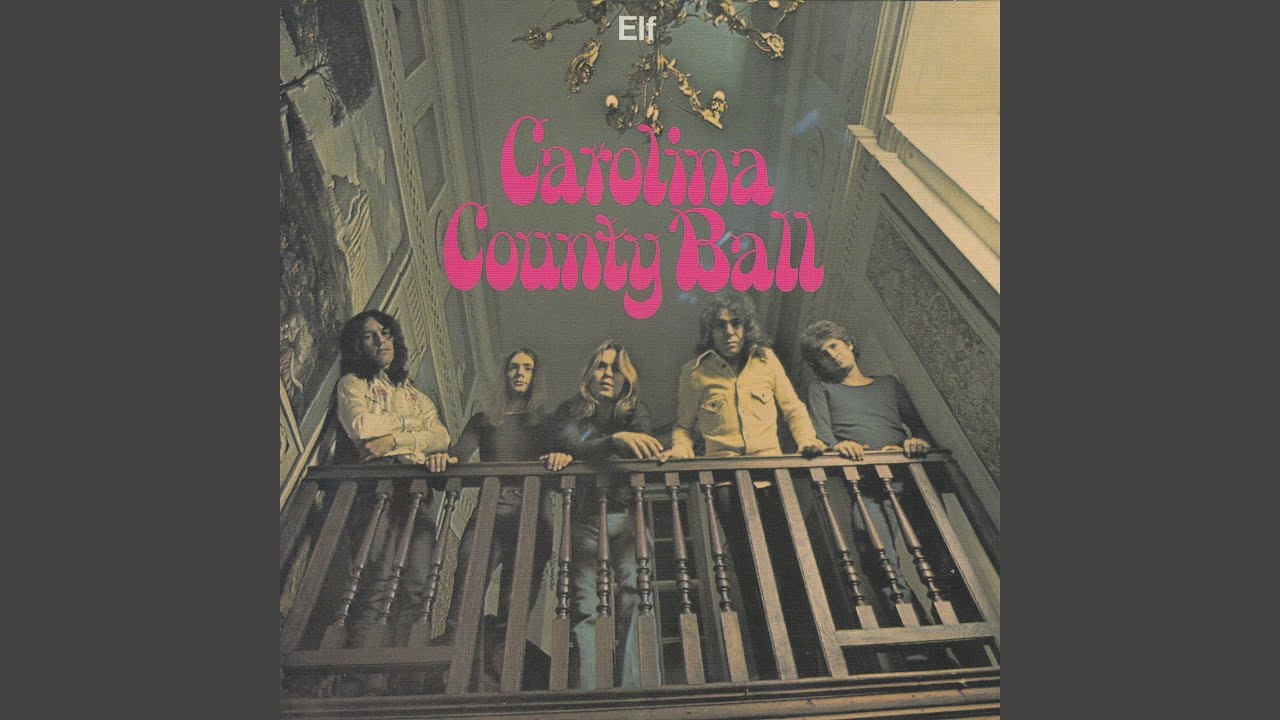
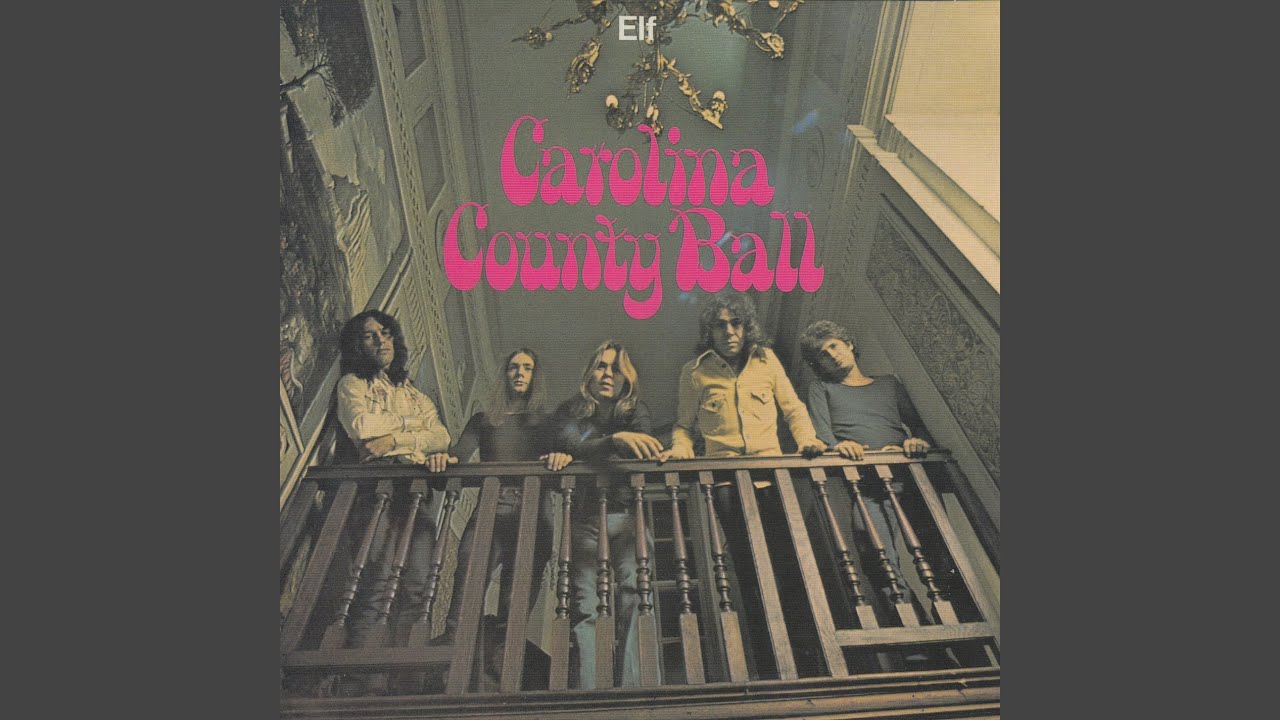
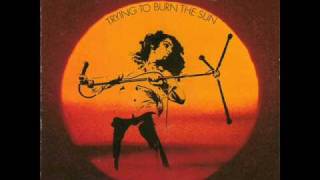
Over the next few years, the group went on to become a regular opening act for Deep Purple. Elf recorded three albums, Elf(1972) Carolina County Ball (1974) (US title: L.A.59) and Trying to Burn the Sun (1975), until the members' involvement in recording the first Rainbow album in early 1975, resulting in Elf disbanding.
Rainbow
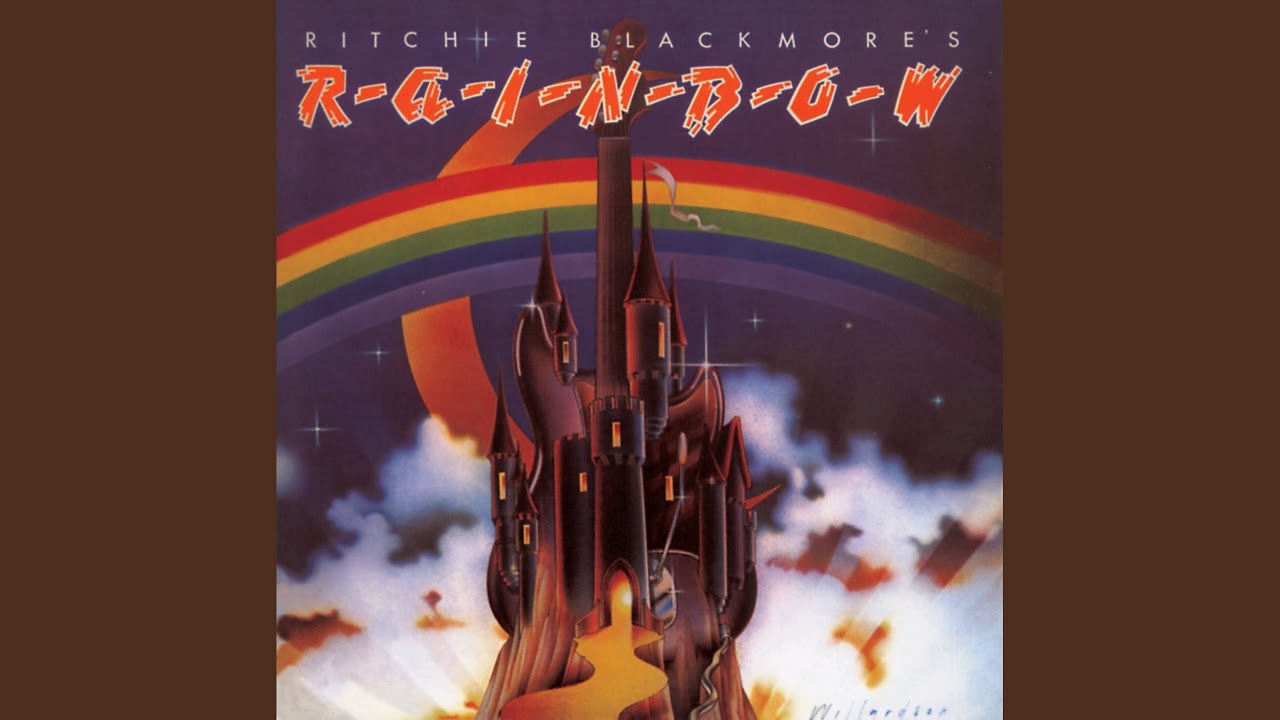
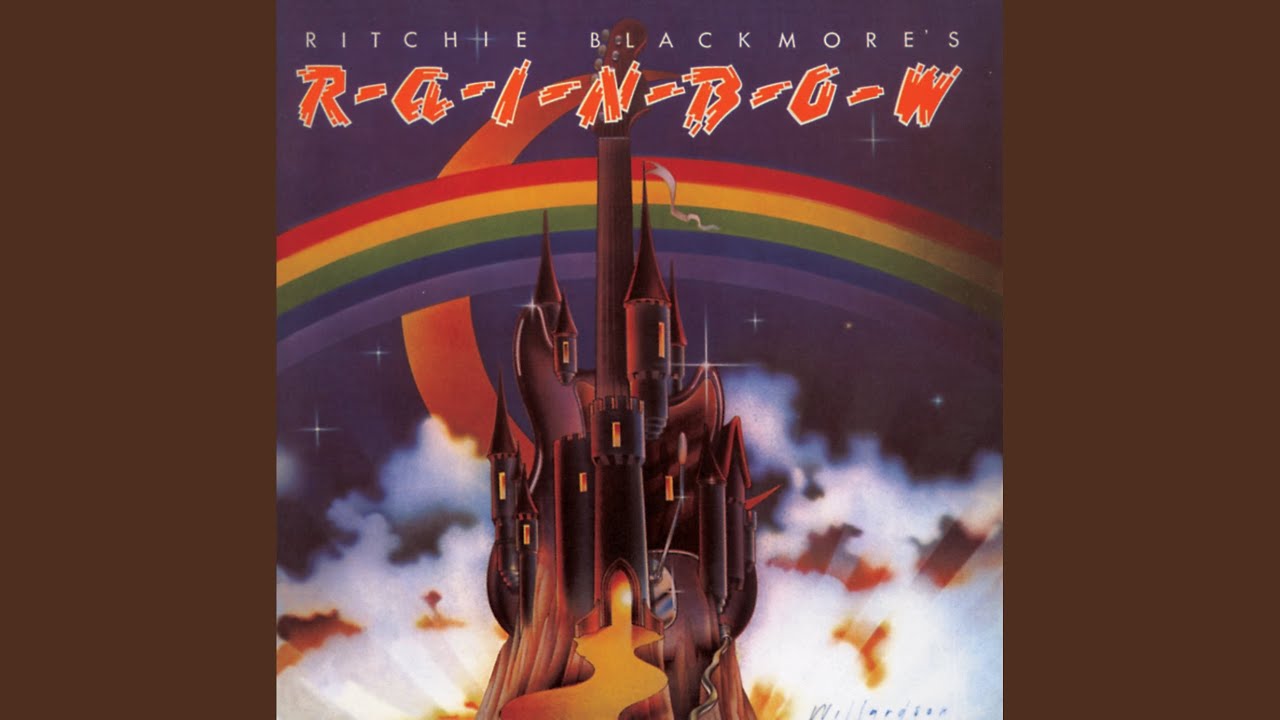
In the mid-1970s, Dio's vocals caught the ear of Deep Purple guitarist Ritchie Blackmore, who was planning on leaving Deep Purple due to creative differences over the band's new direction. Blackmore invited Dio, along with Gary Driscoll, to record two songs in Tampa, Florida, on December 12, 1974. Blackmore stated in 1983,
"I left Deep Purple because I'd met up with Ronnie Dio, and he was so easy to work with. He was originally just going to do one track of a solo LP, but we ended up doing the whole LP in three weeks, which I was very excited about." Being satisfied with the results, Blackmore decided to recruit more of Elf's musicians and form his own band, initially known as Ritchie Blackmore's Rainbow.
Dio is credited on those albums for all lyrical authorship as well as collaboration with Blackmore on musical arrangement. Dio and Blackmore split, with Blackmore taking the band in a more commercial direction, with Graham Bonnet on vocals and the album Down to Earth.
Black Sabbath
Following his departure from Rainbow in 1979, Dio joined Black Sabbath, replacing Ozzy Osbourne. Ronnie James Dio met Sabbath guitarist Tony Iommi by chance at the Rainbow on the Sunset Strip in Los Angeles in 1979. The two musicians were in similar situations, as Dio was seeking a new project and Iommi needed a vocalist. Dio said of the encounter, "It must have been fate, because we connected so instantly." The pair kept in touch until Dio arrived at Iommi's Los Angeles house for a relaxed, getting-to-know-you jam session. On that first day, the duo wrote the song "Children of the Sea," which appeared on the Heaven and Hell album, the first the band recorded with Dio as its vocalist, being released in 1980.
The follow-up album, Mob Rules (1981), featured new drummer Vinny Appice. Personality conflicts began emerging within the band. "Ronnie came into the band and he was doing whatever we told him, basically because he wanted the gig. The next album was a little different," Iommi recalled. In 1982, conflict arose over the mixing of the Live Evil album. Iommi asserted that the album's engineer began complaining to him that he would work all day long on a mix, only to have Dio return to the studio at night to "do his own mix" in which his vocals were more prominent. This was denied by Dio. The conflict led to Dio and Appice ultimately quitting the band later that year.
In 1991, Dio returned to Black Sabbath to record the Dehumanizer album. The album was a minor hit, reaching the Top 40 in the United Kingdom and No. 44 on the US Billboard 200. The single "Time Machine" was featured in the movie Wayne's World, the tenth highest-grossing film of 1992. Close to the end of 1992, Ronnie James Dio and Vinny Appice again left the band, citing an inability to work with Tony Iommi and Geezer Butler.
Dio
Wanting to continue together as a band, Ronnie James Dio and Vinny Appice formed the eponymous Heavy metal band Dio in 1982. Vivian Campbell played guitar and Jimmy Bain played bass, the latter of whom Dio had known since his time with Rainbow. Their 1983 debut album, Holy Diver, included the hit singles "Rainbow in the Dark" and "Holy Diver", which have remained the band's signature songs.
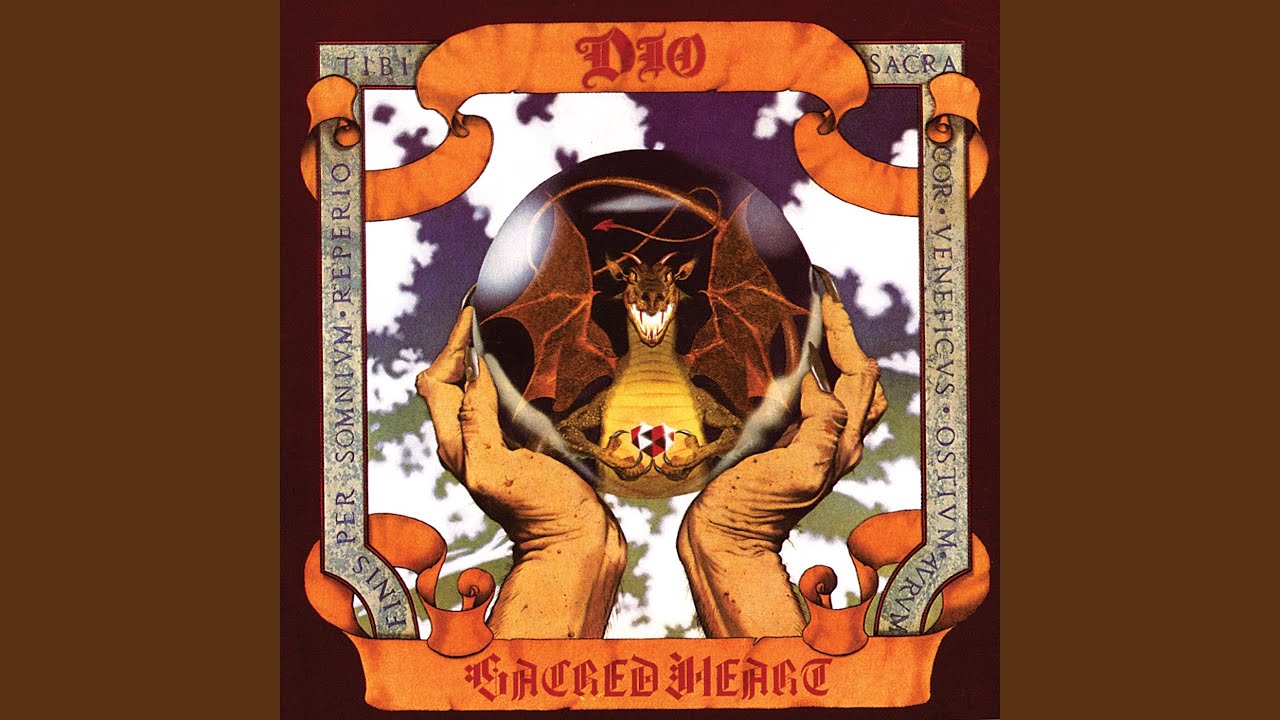
The band added keyboardist Claude Schnell and recorded two more full-length studio albums with this lineup, The Last in Line (1984) and Sacred Heart (1985). A 1984 live recording, A Special from the Spectrum, was filmed during the band's second world tour and released in VHS format only.
The band changed members over the years, eventually leaving Dio as the only original member in 1990. Except for a few breaks, the band was constantly touring or recording. They released 10 albums, with Master of the Moon being the last one, recorded in 2004.
Heaven & Hell
In October 2006, Dio joined Black Sabbath members Tony Iommi, Geezer Butler and former Black Sabbath drummer Vinny Appice to tour under the moniker Heaven & Hell, the title of the first Dio-era Black Sabbath album.
They chose the name Heaven & Hell as Iommi and Butler were still in Black Sabbath with Ozzy Osbourne and felt it was best to use a different moniker for the Dio version of the band. Original Black Sabbath drummer Bill Ward was to be involved in this project, but later withdrew.
In 2007, the band recorded three new songs under the Black Sabbath name for the compilation album Black Sabbath: The Dio Years.
In 2008, the band completed a 98-date world tour. The band released one album under the Heaven & Hell name, The Devil You Know, to critical and commercial acclaim. They also had planned to release a follow-up in 2010.
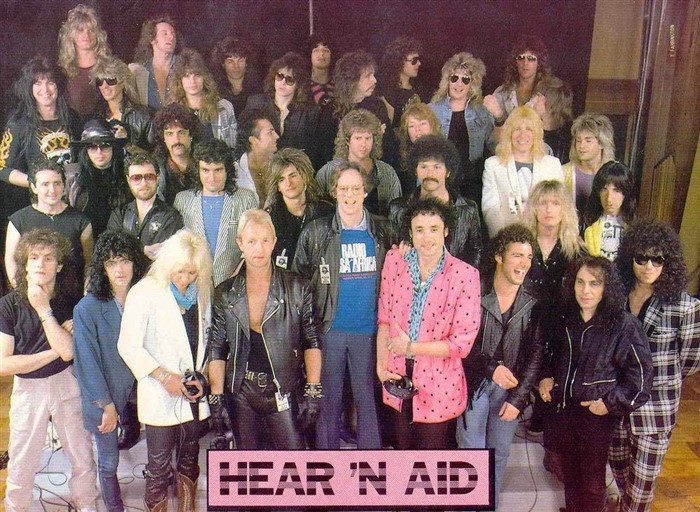
In 1985, Ronnie James Dio contributed to the metal world's answer to Band Aid and USA for Africa with the Hear 'n Aid project. With a Heavy metal all-star ensemble—the brainchild of his fellow Dio bandmates Vivian Campbell and Jimmy Bain—he sang some of the vocals on the single "Stars" and an album full of songs from other artists given to charity. The project raised $1 million within a year.
In 1999, he was parodied in the TV show South Park, in the episode "Hooked on Monkey Fonics", which he later described as "wonderful."
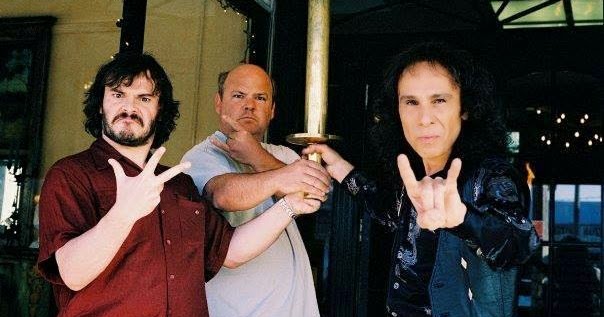
Tenacious D included a tribute song entitled "Dio" that appeared on their self-titled album. The song explains how he has to "pass the torch" for a new generation. Reportedly, Dio approved of it and had Tenacious D appear in his video "Push" from Killing the Dragon in 2002.
In 2005, Dio was revealed to be the voice behind Dr. X in Operation: Mindcrime II, the sequel to Queensrÿche's seminal concept album Operation: Mindcrime. His part (The Chase) was shown in a prerecorded video on the subsequent tour and Dio appeared onstage to sing the part live on at least one occasion (both shown on the Mindcrime at the Moore DVD).
Though he was unable to finish writing it, Dio's autobiography, titled Rainbow in the Dark: The Autobiography, was completed by Wendy Dio and Mick Wall and published posthumously on July 27, 2021.
A documentary about Dio's life titled DIO: Dreamers Never Die premiered at SXSW on March 21, 2022. The film received a limited theatrical release on September 28, and premiered on television on Showtime December 1, 2022.
Personal life
Dio married his first wife Loretta Berardi (born 1941) in 1963. They adopted a son, novelist Dan Padavona, but divorced in 1972.
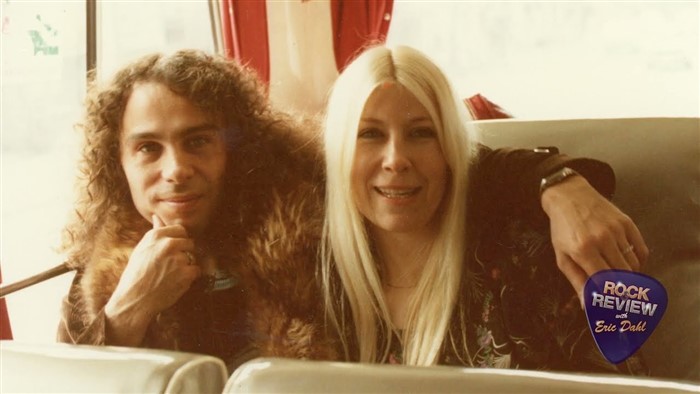
In 1978, Dio married Wendy Walters (born 1945), ex-wife of drummer Aynsley Dunbar and guitarist Ricardo Gaxiola. She also served as Dio's manager. In the 1980s, she managed the Los Angeles rock bands Rough Cutt, NuHaven, Cold Sweat and Hellion. The couple separated but did not divorce. (In 2012, after Dio's death, she married her longtime partner Omar Gimenez.)
In September 2003, Dio accidentally severed his thumb during a gardening accident when a heavy garden gnome fell onto it. Dio was concerned he would no longer be able to do his signature "devil's horns" hand gesture, but a doctor managed to re-attach it.
Illness and death
On November 25, 2009, Dio announced that he was diagnosed with stomach cancer and underwent treatment at the MD Anderson Cancer Center in Houston, Texas.
On May 4, 2010, Heaven & Hell announced they were canceling all summer dates as a result of Dio's health condition. His last live performance was with Heaven & Hell on August 29, 2009, in Atlantic City, New Jersey. Ronnie James Dio died of the illness on May 16, 2010.
Two weeks after his death, a public memorial service was held at The Hall of Liberty, Forest Lawn Hollywood Hills, Los Angeles. The hall was filled to capacity, with many more fans sitting outside the hall watching the memorial on multiple giant screens on both the east and south sides of the hall. Friends, family, and former and current bandmates of Dio, including Rudy Sarzo, Geoff Tate, John Payne, Glenn Hughes, Joey Belladonna and Heaven & Hell/Dio keyboard player, Scott Warren, gave speeches and performed. On the screen was an accompanying documentary covering Dio's career from his early days with Elf to his final project with Heaven & Hell.
Legacy and popular culture
Dio's career spanned more than 50 years. During this period and particularly in the 21st century, he received a number of distinctions and awards. He was inducted into the Cortland City Hall of Fame in 2004 and has a street named after him there called Dio Way. Classic Rock Magazine awarded Dio the "Metal Guru Award" at their yearly "Roll of Honour" awards ceremony in 2006. On January 17, 2007, Dio was inducted into Guitar Center's Rock Walk of Fame in Hollywood. Dio was named "Best Metal Singer" at the Revolver Golden Gods Awards in April 2010 for his work on The Devil You Know, making him the oldest recipient of this award at age 67. He accepted the award in person at what was to be his final public appearance, just one month before his death.
The main stage of Bloodstock Open Air is also named after him in tribute after Heaven & Hell pulled out upon his death. Also, the main stage on Masters of Rock festival carries his name since summer 2010. A Dio monument has been unveiled in Kavarna, Bulgaria. In Mexico the biggest metal fest was named "Hell and Heaven" in honor of Dio; the organization says that the festival was named that way since they had worked with Dio, referring to him as "the greatest singer and person we ever had worked with, a really humble person."
Rolling Stone magazine eulogized Dio with these words: "It wasn't just his mighty pipes that made him Ronnie James Dio — it was his moral fervor...what always stood out was Dio's raging compassion for the lost rock & roll children in his audience.
Dio never pretended to be one of the kids — he sang as an adult assuring us that we weren't alone in our suffering, and some day we might even be proud of conquering it." In 2023, Rolling Stone ranked Dio at number 165 on its list of the 200 Greatest Singers of All Time.
On July 10, 2011, in parallel to Dio's birthday, his hometown of Cortland, New York held a day-long event featuring many central New York local bands and talent for a benefit to the Stand Up and Shout Cancer foundation for cancer research and Dio Memorial concert. Part of the proceeds from the event went to fund a memorial music scholarship for the local city high-school in his name.
On March 31, 2014, the tribute albumRonnie James Dio This Is Your Life was released. It was organized and produced by Wendy Gaxiola, with album proceeds benefitting the Ronnie James Dio Stand Up and Shout Cancer Fund.
On August 6, 2016, a hologram of the singer, created by Eyellusion, made its live debut at the Wacken Open Air Festival. A second hologram was created for a subsequent world tour, which began on December 6, 2017, in Bochum, Germany.
In the fourth season of television series Stranger Things, character Eddie Munson wears a denim vest that includes a large back panel of the artwork on the cover of Dio's The Last in Line.
“I’ll tell you a little story. When I first joined the band, we did the only American tour, in 2004. Everything else we did after that was Europe, South America, and Asia. We’re in the bus every night. And after the show, the tour manager would come in and say, “Ronnie, we have some guests here that want to say hello.” He’d go, “I’m tired. … OK, I’ll do it.”
“He’d ask for a beer, but I never saw him drunk and I never saw him finish the pint he had every night. He had it for a prop, I guess. And so he’d go to whoever was backstage. “Hey, Bill, how are you doing? How is your cousin Peter?” He’s naming all these people that aren’t even there that are relatives of this person. I was like, “He must really know that person.”
He continued, saying:
“After doing that for over a week, every single night, I was like, “Wait a minute — this guy remembers every single guy’s name and their relatives. There must be a trick to this. He must be writing down notes, or something.” But no. So he had that memory. He would memorize because people really mattered to Ronnie. He cared about everyone he met. You met him? If you could see him right now and you had talked about the Yankees, he would talk to you about them again. He was amazing.”
Source: Wikipedia
The Tragic Real-Life Story Of Ronnie James Dio
Why Ronnie James Dio Left Rainbow – And How It Led Him to Black Sabbath
Ronnie James Dio (The Best Metal Frontman & Vocalist Ever)

 An Angel is Missing
 Mr Misery
 Walking Alone
 The Way Of Love
 You Felt The Same Way
 Never More
 Dixie Lee Junction
 Carolina County Ball
 Happy
Happy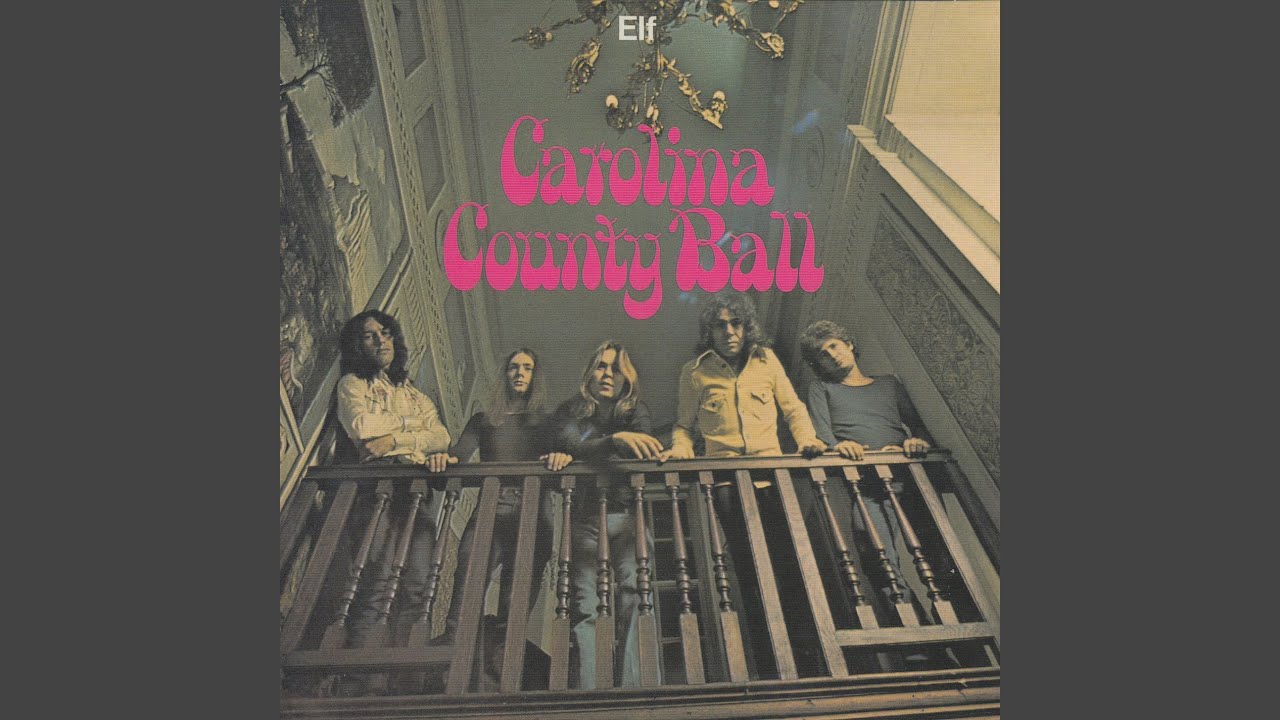 Rainbow
 Blanche
 Sitting in a Dream
 Homeward
 When She Smiles
 Wonderworld
 Catch The Rainbow
 The Temple Of The King
 Rainbow Eyes
 Children of the Sea
 The Sign of the Southern Cross
 Over and Over
 Too Late
 Don't Talk To Strangers
 Shame On The Night
 The Last In Line
 Mystery
 Rock 'n' Roll Children
 Hungry For Heaven
 All The Fools Sailed Away
 I Could Have Been A Dreamer
 Hey Angel
 My Eyes
 To Live for the King
 Give Her The Gun
 This Is Your Life
 Magica Theme
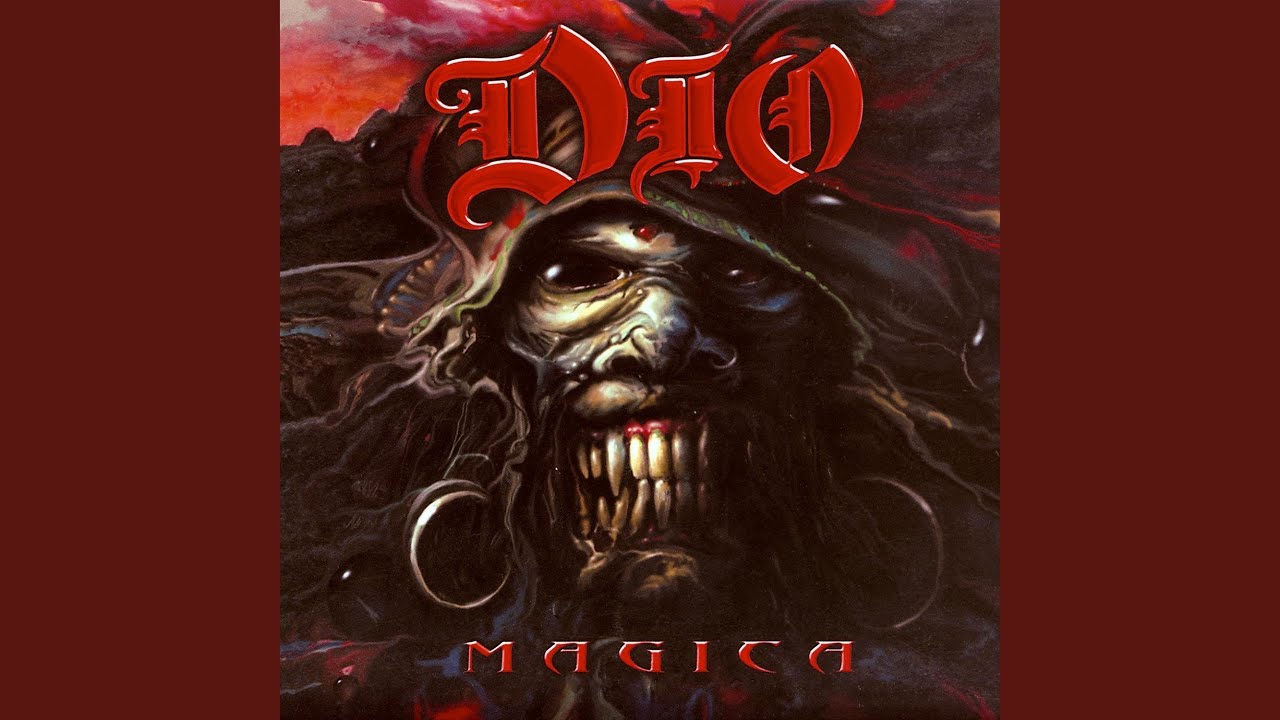 As Long As It's Not About Love
 Losing My Insanity
 Magica (Reprise)
 Throw Away Children