
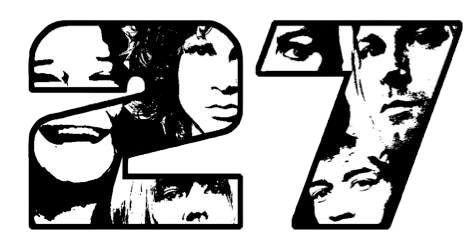
Everyone is dying to belong to this club
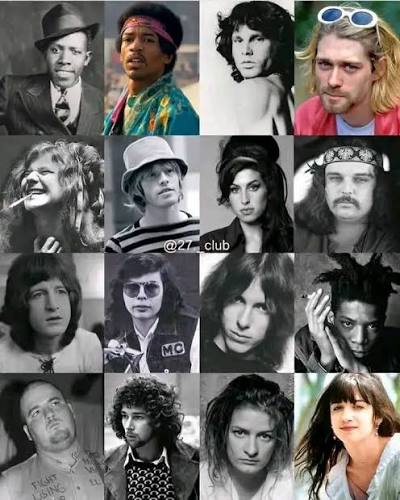
This is the 27 club, with 60 members, 31 Playlists, and 173 albums
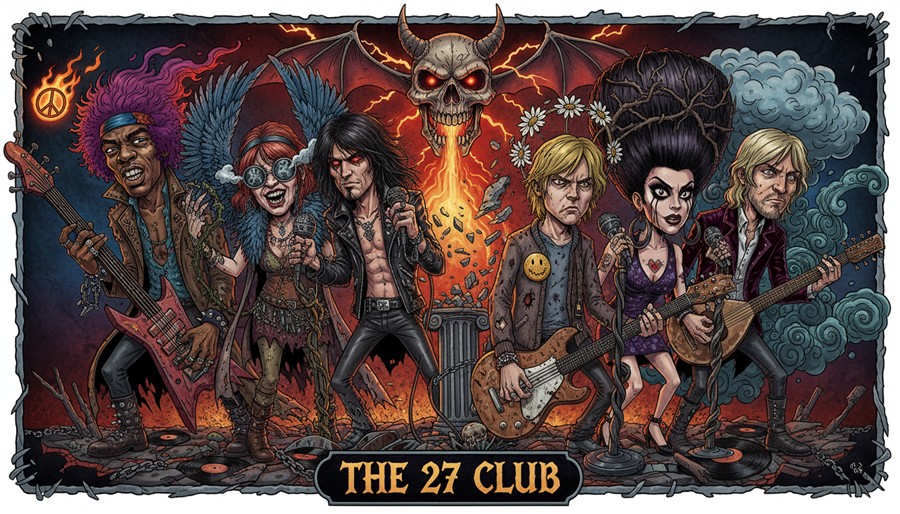


The 27 Club (or Forever 27) is an informal list consisting mostly of popular musicians who died at age 27. As a pop-cultural phenomenon, it is closely linked to the urban myth that musicians' deaths are unusually common, at 27. Although this claim has been refuted by scientific research, it remains a common cultural conception that the phenomenon exists, with many celebrities who die at 27 noted for their high-risk lifestyles.
The original basis for the notion was a cluster of prominent musicians' deaths at the age of 27 between 1969 and 1971, including Brian Jones, Jimi Hendrix, Janis Joplin, and Jim Morrison; but only after the death of Kurt Cobain in 1994 was the notion of a "club" established, and the death of Amy Winehouse in 2011 enhanced its prominence. Different write-ups include a number of other musicians and sometimes other celebrities.
In 2018 Gene Simmons released a new book, 27: The Legend And Mythology Of The 27 Club.
The Curse of the 27 club
The "Curse of the 27 Club" is a persistent urban legend and a cultural phenomenon in the music industry. It refers to the striking and tragic coincidence in which a large number of iconic musicians and artists died at the exact age of 27. Although the media and fans often romanticize it as a mystical curse, scientific studies and statistics indicate that there is no factual basis for it. Instead, the cumulative effect of deaths is the sad result of the immense pressure of early fame, combined with widespread drug abuse, alcohol addiction, and untreated mental health issues.
The Origin of the Myth
The idea of the "club" emerged in the early 1970s when four giant rock icons died within a span of just two years.
Brian Jones (The Rolling Stones) – Drowned in a swimming pool in July 1969.
Jimi Hendrix – Choked on his own vomit after an overdose of sleeping pills in September 1970.
Janis Joplin – Died of a heroin overdose in October 1970.
Jim Morrison (The Doors) – Died of alleged heart failure in a Paris bathtub in July 1971.
Although conspiracy theories and pop culture sometimes speak of a "curse," statistical studies have shown that there is no increased risk for musicians to die specifically at age 27. However, the risk of an early death is generally higher than average for pop musicians. This is due to the enormous workload, constant media attention, and easy access to drugs and alcohol within the music industry.
Cultural perception
Beginning with the deaths of several 27-year-old popular musicians between 1969 and 1971 (namely Brian Jones, Jimi Hendrix, Janis Joplin and Jim Morrison), dying at the age of 27 came to be, and remains, a perennial subject of popular culture, celebrity journalism, and entertainment industry lore.
This perceived phenomenon, which came to be known as the "27 Club", attributes special significance to popular musicians, artists, actors, and other celebrities who died at age 27, often as a result of drug and alcohol abuse or violent means such as homicide, suicide, or transportation-related accidents.
The cultural interpretation of events gave rise to an urban myth that celebrity deaths are more common at 27, a claim that has been refuted by statistical research as discussed in the "scientific studies" section below. However, a subsequent statistical analysis demonstrated that the myth itself has shaped cultural memory by boosting the visibility and cultural prominence of those who die at 27.
History
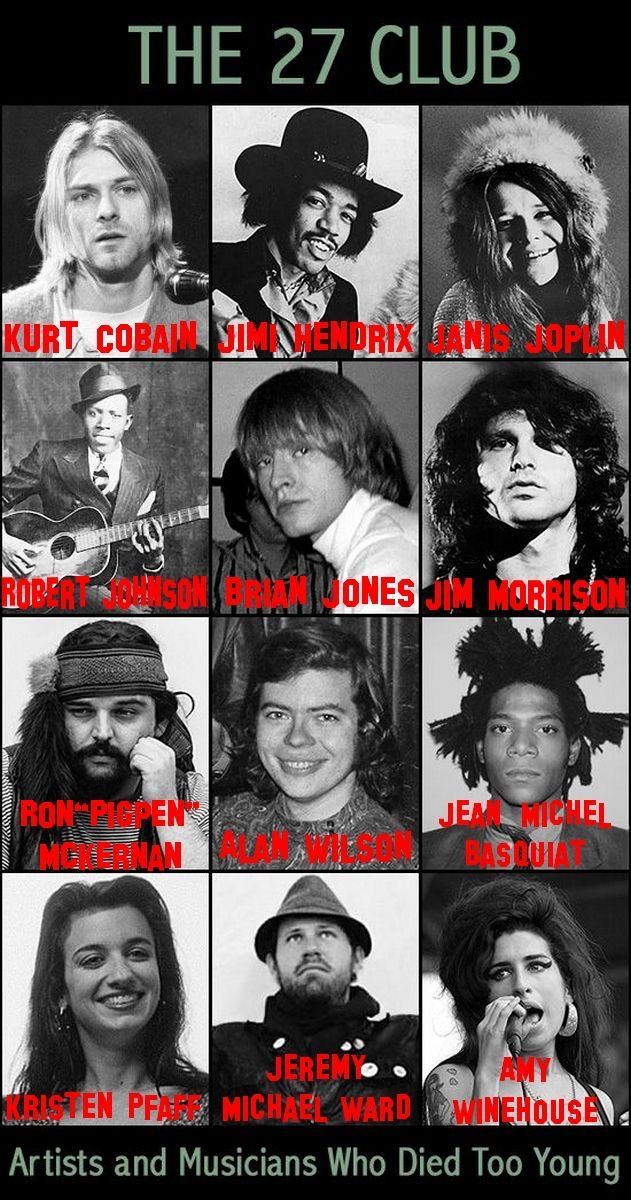
Brian Jones, Jimi Hendrix, Janis Joplin, and Jim Morrison all died at the age of 27 between 1969 and 1971. At the time, the coincidence gave rise to some comment, but, according to Charles R. Cross, a biographer of Jimi Hendrix and Kurt Cobain, "it wasn't until Kurt Cobain took his own life in 1994 that the idea of the 27 Club arrived in the popular zeitgeist." Cross claims that the "launch of the Club concept" can be traced to two factors. The first was the growing influence of the Internet and sensational celebrity journalism on popular culture in the years following Cobain's death. The second was how media outlets chose to interpret a statement by Cobain's mother, Wendy Fradenburg Cobain O'Connor, quoted in the local Aberdeen, Washington, newspaper The Daily World, and subsequently carried worldwide by the Associated Press (AP): "Now he's gone and joined that stupid club. I told him not to join that stupid club." Many contemporary journalists interpreted her words as referring to the infamous untimely deaths of fellow rock musicians like Hendrix, Joplin, and Morrison, a view shared by Cross and R. Gary Patterson, chronicler of rock music urban legend.
The intended meaning of "that stupid club" referred to by Cobain's mother is disputed. In his analysis of how her quote helped popularize the 27 Club, Eric Segalstad, author of The 27s: The Greatest Myth of Rock & Roll (2008), asserted that she was actually referring to the "tragic family matter" of Cobain's two uncles and his great-uncle, all of whom had committed suicide. Other contemporary journalists linked her quote to the then-recent heroin-related deaths of fellow young Seattle rock musicians Stefanie Sargent of 7 Year Bitch and Andrew Wood of Mother Love Bone, both aged 24. Cross, himself, dismissed "the absurd notion that Kurt Cobain intentionally timed his death so he could join the 27 Club", noting that Cobain "had nearly died from drug overdoses on at least two dozen occasions in the year before his death... [and] made several previous suicide attempts at various ages."
In 2011, Amy Winehouse died at the age of 27, prompting a renewed swell of media attention devoted to the 27 Club.
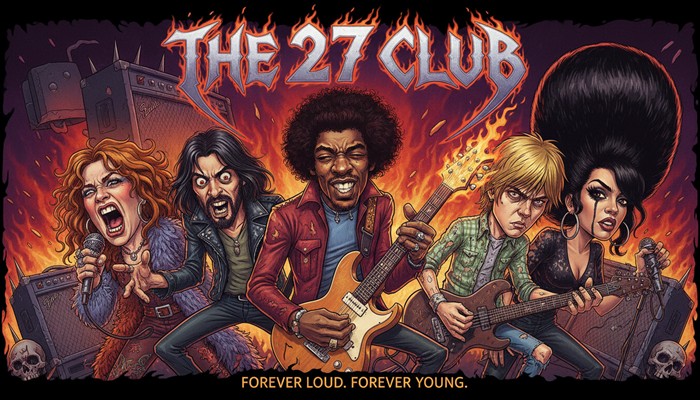
Three years earlier, Winehouse's personal assistant, Alex Haines, told the British press that Winehouse, then 25, feared she would join Jim Morrison, Brian Jones, and Kurt Cobain in dying at 27: "She reckoned she would join the 27 Club of rock stars who died at that age. She told me, 'I have a feeling I'm gonna die young.'"
White lighter myth
A derivative urban legend emerged in the popular culture of smoking and cannabis as the so-called white lighter myth or white lighter curse. It purports that Hendrix, Joplin, Morrison, Cobain, and others linked to the 27 Club died while in possession of a white disposable cigarette lighter, leading such items to become associated with bad fortune. Snopes discredited the theory in 2017, noting that disposable Bic lighters did not enter production until 1973 — several years after the deaths of Hendrix, Joplin, and Morrison — and disposable lighters from other companies were not widely available before then.
Scientific studies
Despite the cultural significance given to musician and celebrity deaths at age 27, the common claim that they are statistically more common at this age is an urban myth, refuted by scientific research.
Statistical evidence collected in 2014 by public health researcher Dianna Kenny suggested that popular musicians were most likely to die at the age of 56 (2.2% compared to 1.3% at 27). A 2011 study in the British Medical Journal found that the risk of death for musicians at the age of 27 was the same as for ages 25 and 32. The study noted that young adult musicians had a higher death rate than the general young adult population, concluding that "fame may increase the risk of death among musicians, but this risk is not limited to age 27."
In popular culture
The 27 Club frequently appears by name and reference in popular culture and mass media. Several exhibitions have been devoted to the idea, as well as novels, films, stage plays, songs, video games, and comics.
Music
The title of the song "27" by Fall Out Boy from their fourth studio album Folie à Deux (2008) is a reference to the club. The lyrics explore the hedonistic lifestyles common in rock and roll. Pete Wentz, the primary lyricist of Fall Out Boy, wrote the song because he felt that he was living a similarly dangerous lifestyle.
John Craigie's song "28", which appeared on his first "official" studio album Montana Tale (2009), and live album Opening for Steinbeck (2018), is written from the perspective of 27 Club members Jim Morrison, Janis Joplin, and Kurt Cobain, as each contemplates their respective mortality and imagines what they would do differently "if I could only make it to twenty-eight". Craigie wrote the song when he himself was age 27.
The theme is referenced in the song "27 Forever" by Eric Burdon, on his studio album 'Til Your River Runs Dry (2013).
Magenta's studio album "The Twenty Seven Club" (2013) references the club. Each track is a tribute to a member of the club.
Halsey's song "Colors", from her debut studio album Badlands (2015), includes the line: "I hope you make it to the day you're 28 years old."
Mac Miller's song "Brand Name", from his third studio album GO:OD AM (2015), features the line "To everyone who sell me drugs, don't mix it with that bullshit, I'm hopin' not to join the 27 Club."
Frank Ocean referenced the club and the white lighter myth on the song "Nights" from his second studio album Blonde (2016), where he says: "No white lighters 'til I fuck my twenty-eighth up."
JPEGMafia's debut studio album Black Ben Carson (2016) includes a song titled "The 27 Club", which the song refers to the club. He references members Jimi Hendrix, Janis Joplin, and Kurt Cobain.
Adore Delano released a song called "27 Club" on her third studio album Whatever (2017), with the repeated lyric: "All of the legends die at twenty-seven." Delano was aged 27 at the time of release.
Juice Wrld referenced the club on his song "Legends" (2018), where he says: "What's the 27 Club? We ain't making it past 21."
Nessa Barrett's song "La Di Die", released in collaboration with Jxdn in 2021, contains a reference to the club: "I'll be dead at 27, only nine more years to go."
Video games
In the stealth video game Hitman (2016), one of the in-game missions, "Club 27", involves killing an indie musician who is celebrating his 27th birthday.
The Big Six of the 27 club - The iconic core
The list below shows the six most famous names traditionally counted among this "club"
These are the iconic core members who laid the foundation for the myth surrounding the 27 Club
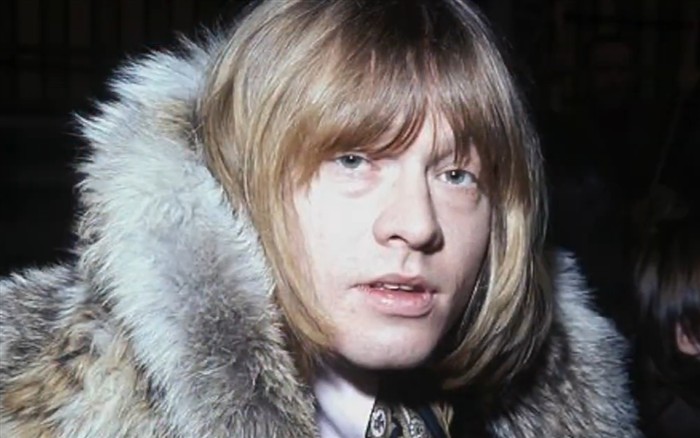
Brian Jones
Founder and guitarist of The Rolling Stones (died July 3, 1969).
Lewis Brian Hopkin Jones (February 28, 1942 – July 3, 1969) (The same date as Jim Morrison, only 2 years earlier.) was a British musician and the original founder and leader of The Rolling Stones. He was an exceptionally talented multi-instrumentalist who played a crucial role in shaping the band's early sound and fashionable image in the 1960s.
Due to severe alcohol and drug addictions and internal tensions, he was kicked out of the band in June 1969, after which he drowned under mysterious circumstances in his own swimming pool less than a month later. He was only 27 years old. In doing so, he became one of the first iconic members of the infamous 27 Club.
Brian Jones' death at his country home in England in 1969 seems to be the result of his foolish behavior. To mix alcohol and drugs and then dive into the swimming pool was to swim directly into the arms of death. As clear as this seems, the death of Brian Jones has become one of the most persistent mysteries of Rock & roll, with many people questioning the official version of what happened. Even members of The Rolling Stones have expressed doubts. "And still the mystery of his death hasn't been solved," Keith Richards has said. "I don't know what happened, but there was some nasty business going on." At Brian Jones' funeral, only Charlie Watts and Bill Wyman from the Stones were present.
Brian was an multi-instrumentalist with more than 20 instruments: Guitar (acoustic, electric, and Slide guitar), Harmonica, Sitar, Mellotron, Marimba, Dulcimer (Appalachian dulcimer), Xylophone, Autoharp, Tambura, Piano, Organ, Theremin, Saxophone, Recorder, Trumpet, Trombone, Percussion, Kazoo, Ocarina, Euphonium, and Tuba.
Jimi Hendrix
Revolutionary rock guitarist and singer (died September 18, 1970).
Jimi Hendrix is one of the foundational, charter members of the 27 Club.
Hendrix choked in his sleep on his own vomit after taking an overdose of sleeping pills (barbiturates) combined with a heavy intake of red wine.
The fatal night
Hendrix spent his final hours at the Samarkand Hotel in London with his girlfriend Monika Dannemann. After a night out, the musician took a very large quantity of sleeping pills. According to toxicological analysis, the amount ingested significantly exceeded safety limits. Because he had also consumed alcohol that evening, he fell into a deep, unconscious sleep.
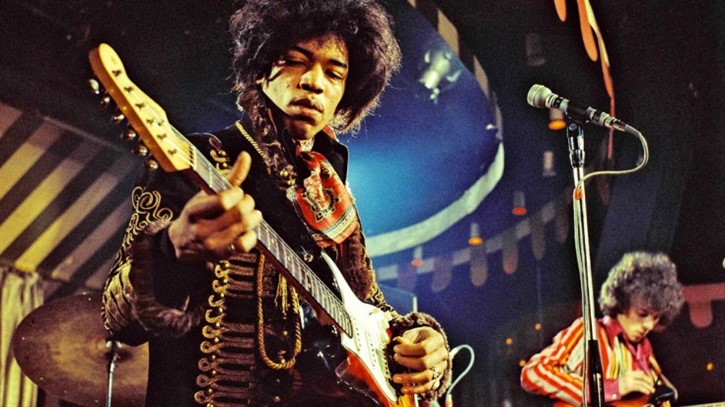
The combination of sedatives and alcohol led to a critical condition in which he choked when he vomited.
Conspiracy theories
Although the official coroner determined the cause of death to be an accident involving barbiturate poisoning, persistent rumors and theories have always remained surrounding his death:
Late help: There is much debate about the exact time Dannemann called the ambulance and whether Hendrix was still alive when paramedics arrived. Murder Allegation: In 2009, a former roadie claimed in a book that the guitarist's manager, Michael Jeffery, had murdered Hendrix to collect a multi-million dollar life insurance claim. However, this claim has never been legally proven.
Due to his early death at the age of 27, Hendrix joined the 27 Club.
Janis Joplin
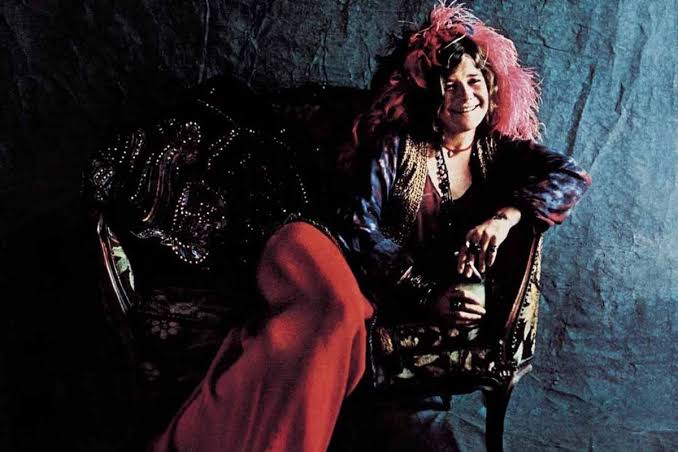
Iconic blues and rock singer (died October 4, 1970)
The death of Janis Joplin
Janis Joplin died on October 4, 1970, at the age of 27 from an accidental heroin overdose. She was found dead in her hotel room (the Landmark Hotel) in Hollywood, Los Angeles. Her raw, powerful voice and unique performances (such as at Woodstock) made her a legend, and her early death reinforced the myth surrounding the Club of 27.
It is suspected that it was an accident and not suicide. The heroin she used that day turned out to be unusually pure and stronger than usual. Other customers of the same dealer also died of an overdose that week.
Because Joplin was 27 years old when she died, she is often cited as a member of the infamous group of musicians and artists who died at the same age.
Her death came shortly after that of Jimi Hendrix (September 18, 1970) and reinforced the myth surrounding the '27 Club'. She left a great void in the Rock and Blues world with her powerful, raw voice.
Jim Morrison
Poet and charismatic lead singer of The Doors (died July 3, 1971).
Jim Morrison, the charismatic lead singer and poet of The Doors, died on July 3, 1971, at the age of 27 in Paris. This made him one of the absolute key figures of the infamous 27 Club.
In the spring of 1971, Morrison moved to Paris with his girlfriend Pamela Courson to find peace and focus on his poetry. However, on the morning of July 3, he was found lifeless by Courson in the bathtub of their apartment.
Official cause: Heart failure.
Mystery: Because the French authorities did not order an autopsy,
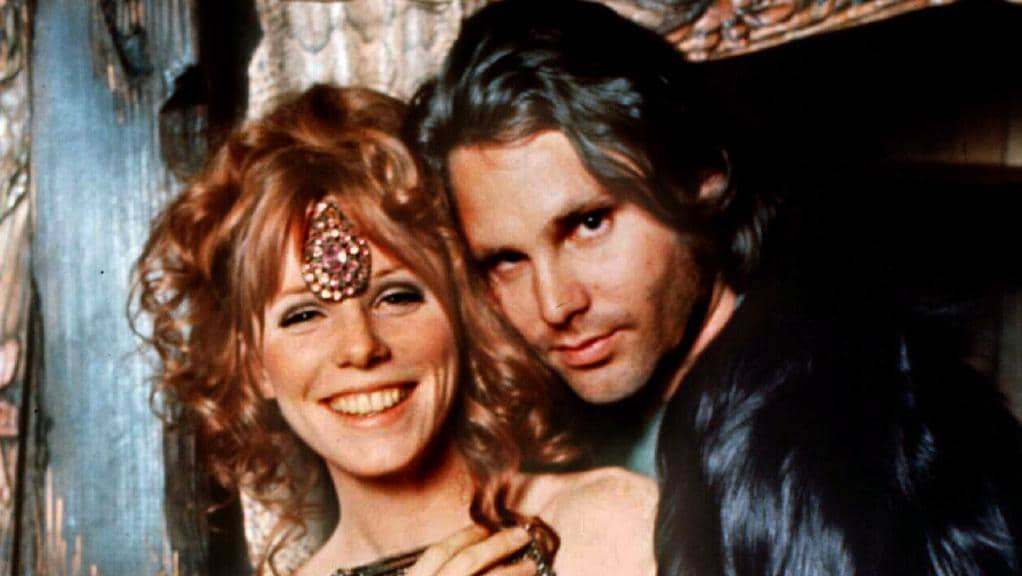
countless conspiracy theories immediately arose. Many suspect that an unintentional heroin overdose was the real cause.
Additional tragedy: Pamela Courson died exactly three years later, in 1974, also from an overdose at the age of 27. His resting place at the Père-Lachaise Cemetery in Paris still attracts hundreds of fans from all over the world, every day.

Kurt Cobain
Frontman and songwriter of the grunge band Nirvana (died April 5, 1994)
Kurt Cobain is one of the most prominent and influential members of the 27 Club.
Kurt Cobain's role in the 27 Club
The catalyst: His death in 1994 sparked the public fascination and the naming of the 27 Club.
His mother's statement: After his death, his mother, Wendy Fradenburg, declared in an interview: "Now he's gone and joined that stupid club. I told him not to join that stupid club." Although she likely meant his early death, like that of other deceased family members, the media seized upon this as the ultimate confirmation of the myth.
That's really selfish to live to 90 years old unless you have something to offer like maybe William Burroughs. I definitely don't want to be that old. I feel more bonded with the Jim Morrison type of living on the edge, rock & roll poet, in a conservative way. –Kurt Cobain
Amy Winehouse
Globally successful jazz and soul singer (died July 23, 2011).
British Soul and Jazz singer Amy Winehouse died on July 23, 2011, at the age of 27 from alcohol poisoning. Her untimely death made her one of the most prominent and recent members of the infamous 27 Club.
The cause of death: Winehouse was fatally struck by accidental alcohol poisoning following a period of abstinence. At the time, her blood alcohol level was more than five times the permitted British driving limit.
Predictive fear: Before her passing, Winehouse repeatedly expressed her personal fear of dying at the age of 27.

This reinforced the myth-making surrounding her death in the media immediately following the tragic news.
The iconic core: With her passing, she joined the so-called "Big Six" of the club.
Other famous musicians and artists
Robert Johnson
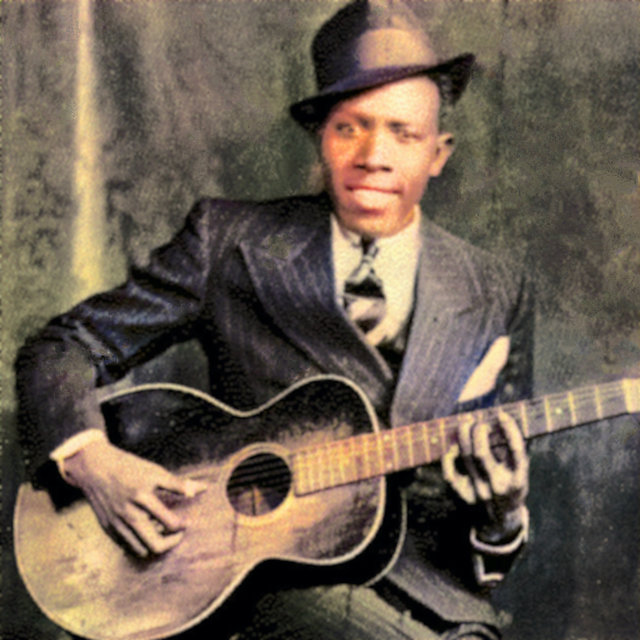
One of the Delta blues' most celebrated and singular talents, Robert Johnson recorded chilling, folkloric songs about hellhounds, the Devil and general despair amid swinging, dissonant, sometimes off-kilter guitar lines – the likes of which have reverberated through rock & roll for decades. He recorded less than 50 songs (29) – including ones later covered by Cream ("Cross Road Blues"), Captain Beefheart ("Terraplane Blues") and The Rolling Stones ("Love in Vain," "Stop Breaking Down") – and performed alongside the likes of Howlin' Wolf, Elmore James and Memphis Slim as he rose to fame. "You want to know how good the blues can get?" Keith Richards once said. "Well, this is it." In August 1938, just a few months after his 27th birthday, Robert Johnson made moves on the wife of the owner of a roadhouse where he was playing, drank from an open bottle of whiskey he was offered, and died three days later of strychnine poisoning and pneumonia. He is buried in an unmarked grave in Mississippi.
The legendary blues musician Robert Johnson is widely regarded as the very first member of the infamous 27 Club.
The Founder of the Myth
Robert Johnson (May 8, 1911 – August 16, 1938) was a pioneer of Delta Blues. His revolutionary guitar technique and raw vocal sound later formed the absolute blueprint for modern Rock 'n' roll. Although he lived in relative anonymity during his lifetime and recorded only 29 songs, decades later he inspired iconic bands such as The Rolling Stones and Eric Clapton.
The Pact with the Devil
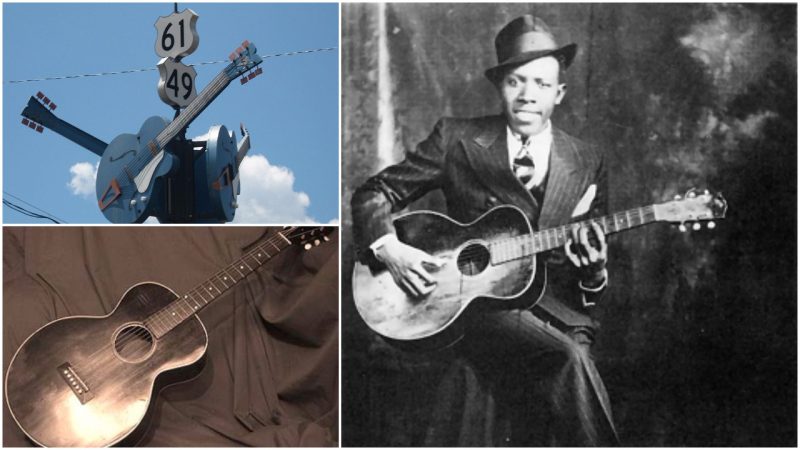
One of the greatest mysteries in music history surrounds the young musician. According to the well-known legend, Johnson was initially a mediocre guitarist. After a brief disappearance, he suddenly returned as an absolute guitar virtuoso. This led to the persistent rumor that he had sold his soul to the devil at a crossroads in Mississippi in exchange for his unprecedented musical talent. Songs like "Cross Road Blues" and "Hellhound on My Trail" only reinforced this dark mystique.
A Mysterious Death at the Age of 27
Just like his life, Robert Johnson's death is shrouded in mystery. On August 16, 1938, he died suddenly at the age of 27. According to eyewitnesses, including fellow musician Sonny Boy Williamson II, he was poisoned with strychnine. A jealous husband of a woman Johnson was flirting with allegedly poured the poison into his bottle of whiskey during a performance at a local bar. Johnson died a few days later and was buried in an anonymous grave.
The Birth of the 27 Club
Although the term "27 Club" only really became popular after the death of Nirvana frontman Kurt Cobain in 1994, Johnson has retroactively become the foundation of this club. He shares this tragic status with later icons such as Jimi Hendrix, Janis Joplin, The Doors frontman, Jim Morrison, and Amy Winehouse. Incidentally, scientific research has shown that, statistically speaking, musicians do not die at age 27 more often than at other ages; it remains a macabre and fascinating coincidence.
Ron "Pigpen" McKernan
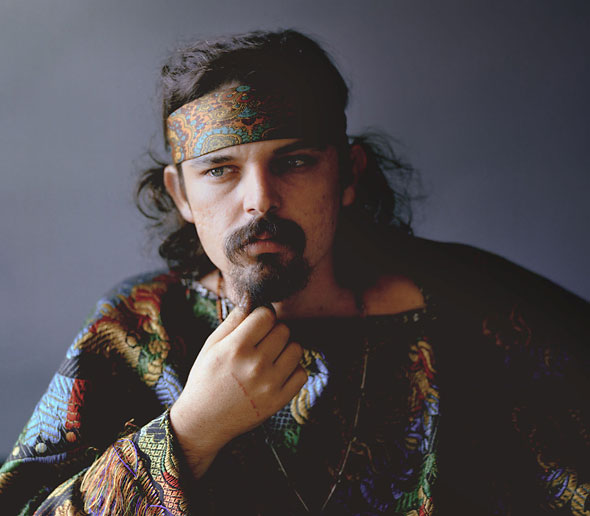
Ron "Pigpen" McKernan was a founding member, keyboardist, and original frontman of the Grateful Dead.
His Role in the Grateful Dead
The Original Frontman: He was the central figure who initially drove the creation of the group in 1965.The Blues Blueprint: He brought an authentic, gritty R&B and Blues element to the band's foundation. The Multi-Instrumentalist: He commanded the stage playing the electric organ, harmonica, and acoustic guitar. Signature Tracks: He was famous for leading show-stopping, extended live performances of covers like "Turn On Your Love Light".
The Cultural Divide and Decline
Unlike his bandmates who fully embraced the 1960s counterculture and psychedelic drugs like LSD, Pigpen avoided psychedelics entirely. Instead, he preferred alcohol, frequently drinking whiskey and fortified wines like Thunderbird.
As the Grateful Dead shifted their musical direction toward experimental space-rock and long improvisational jams, his traditional blues role began to shrink. Concurrently, heavy alcohol abuse took a massive toll on his body by his mid-twenties.
He developed severe health complications, including cirrhosis of the liver and ulcers.
His Passing and Legacy
By 1971, health issues forced him to stop touring consistently. He played his final show with the Grateful Dead at the Hollywood Bowl on June 17, 1972. Less than a year later, his landlady found him dead in his home in Corte Madera, California. The official cause of death was a gastrointestinal hemorrhage.
Following his death, his bandmates were deeply devastated, with Jerry Garcia later stating that his passing marked the definitive end of the "original" Grateful Dead. The band's classic track "He's Gone" subsequently evolved into a live eulogy and anthem dedicated to his memory.
David Michael Alexander
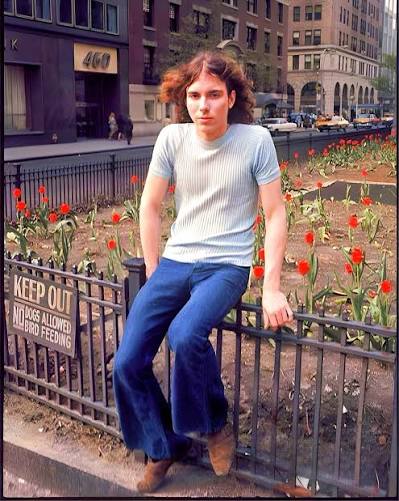
Original Bassist for The Stooges. Dave Alexander is a notable member of the infamous 27 Club. As the original founding bassist for the influential Proto-punk band The Stooges, Alexander helped construct the foundational blueprint for Punk rock music.
Musical Legacy and The Stooges
Alongside frontman Iggy Pop and brothers Ron and Scott Asheton, Alexander formed The Stooges in 1967. Although he had minimal musical experience initially, he learned quickly and contributed vital creative ideas to the band's first two landmark albums, The Stooges (1969) and Fun House (1970). He is credited with co-writing several songs and introducing outside-the-box conceptual elements, such as the Indian-inspired progression on "We Will Fall" and the unique bass drive on "Dirt".
Dismissal and Tragic Death
Alexander was frequently described by bandmates as a quiet, mysterious "loose cannon" with an interest in philosophy and the occult. However, he suffered from severe substance abuse, struggling with alcohol, marijuana, and LSD from a young age.
His tenure with the band ended abruptly in August 1970 when he took too many downers before the Goose Lake International Music Festival and became too intoxicated to play on stage. Iggy Pop fired him immediately after the incident.
Following his dismissal, his health steadily declined due to worsening alcoholism. In early 1975, he developed severe pancreatitis. He was admitted to a hospital where his lungs filled with fluid, and he passed away from a pulmonary edema on February 10, 1975, at age 27.
Posthumous Recognition
Often referred to by historians and fans as "The Lost Stooge" due to his reclusive nature and early exit from the spotlight.
Iggy Pop explicitly paid tribute to him in the spoken-word intro of the song "Dum Dum Boys" on his 1977 solo album The Idiot.
When The Stooges were inducted into the Rock and Roll Hall of Fame in 2010, Iggy Pop formally honored Dave Alexander’s vital contributions to the band's enduring legacy.
Gary Thain
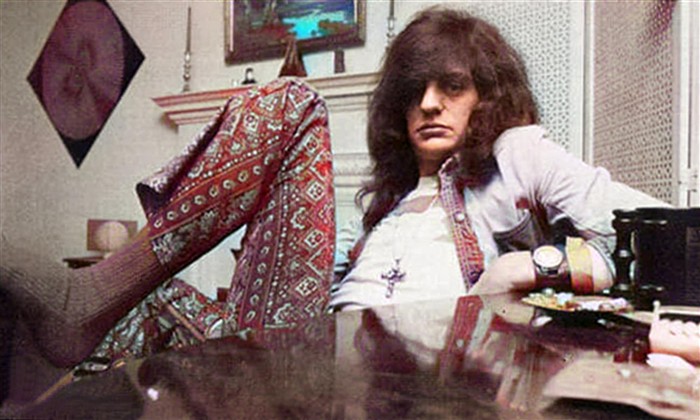
The influential New Zealand-born bassist for the rock band Uriah Heep, died at the age of 27 on December 8, 1975, making him a member of the informal "27 Club"
Life and Career
Birth: Born on May 15, 1948, in Christchurch, New Zealand.
Early Work: Played for four years in the Keef Hartley Band before joining major acts.
Uriah Heep (1972–1975): Joined the classic lineup of the British Progressive hard rock band in February 1972.
Known for a melodic, fast, and fluid bass style that stood out in Hard rock.
He performed on key studio albums including Demons and Wizards, The Magician's Birthday, Sweet Freedom, and Wonderworld, as well as the popular Uriah Heep Live album.
Decline and Death
Electric Shock: On September 15, 1974, during a concert in Dallas, Texas, he suffered a severe electric shock on stage, which severely impacted his health.
Compounding his health struggles, he battled a heavy heroin addiction. His condition affected his live performances, leading to his dismissal from Uriah Heep in early 1975.
He passed away from respiratory failure caused by a heroin overdose at his home in London on December 8, 1975.
Kristen Pfaff
Kristen Pfaff was an American bass guitarist who died at the age of 27 and is therefore considered part of the '27 Club.
Who was she: Bass guitarist for the alternative Rock/Grunge bands Hole and Janitor Joe.
Date of birth: May 26, 1967
Date of death: June 16, 1994
Cause of death: A heroin overdose in Seattle, two months after the death of Kurt Cobain.
Her background
She played on the famous Hole album Live Through This (1994). She tried to kick her heroin addiction in Minneapolis, but died shortly after returning to Seattle to pick up her belongings.


Mia Zapata
Mia Zapata was the lead singer of the Seattle Punk rock band The Gits, and she is tragically counted among the members of the "27 Club" after she was murdered at age 27 in July 7, 1993.
Lead vocalist and lyricist for The Gits, a rising punk rock band in Seattle's early-1990s music scene.
Known for her powerful, raw voice and dynamic stage presence, often compared to a mix of Janis Joplin and punk icons.
Unlike many members of the 27 Club who died from drug overdoses or health issues, Zapata was violently attacked, raped, and strangled while walking home in Seattle.
Her murder went unsolved for ten years until DNA evidence led to the 2003 arrest of Jesus Mezquia, who was convicted and sentenced to 36 years in prison.
Pete Ham
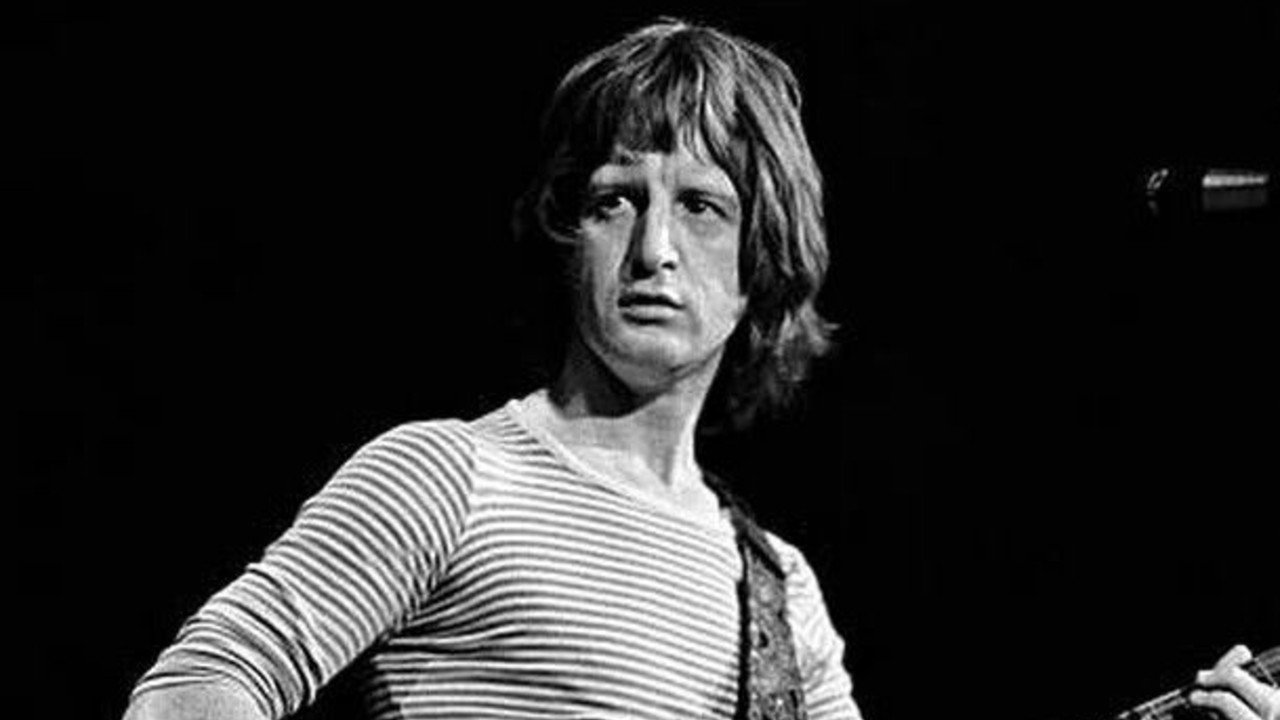
Pete Ham, the Welsh lead vocalist and songwriter for the 1970s rock band Badfinger, died by suicide on April 24, 1975, at the age of 27, making him a recognized member of the tragic "27 Club".
He was The primary composer and guitarist for Badfinger, famous for hits like "No Matter What," "Day After Day," and "Baby Blue," as well as co-writing the global standard "Without You".
Date of death: April 24, 1975 (three days before his 28th birthday).
Cause of death: Suicide by hanging in his garage.
Contributing factors: Severe financial ruin and depression caused by severe mismanagement and fraud by the band's manager, Stan Polley.
Richey James Edwards
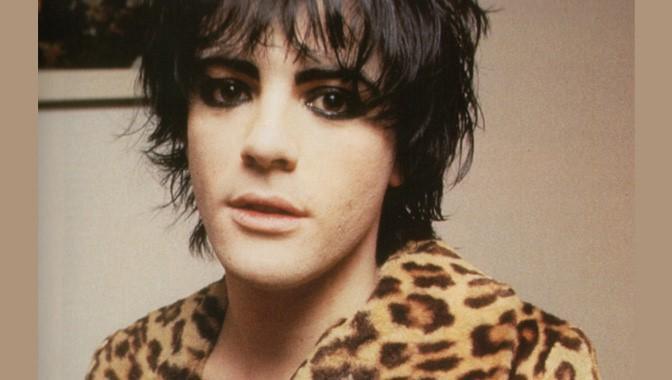
Richey Edwards, the lyricist and rhythm guitarist for the Manic Street Preachers, is often included as a member of the informal "27 Club" following his mysterious disappearance on February 1, 1995, at the age of 27.
The Disappearance: Edwards vanished on February 1, 1995, from a London hotel room on the morning he was scheduled to fly to the United States for a promotional tour.
The Vehicle: His abandoned Vauxhall Cavalier was later discovered near the Severn Bridge in England, a well-known location associated with suicides.
Body and Status: His body was never found. He was legally declared dead in absentia on November 24, 2008.
The "27 Club" Connection: Because he was 27 years old when he disappeared—and is presumed to have died by suicide—he is frequently grouped by music historians and fans with other iconic musicians who died at that same age, such as Kurt Cobain and Jimi Hendrix.
Albums
Brian Jones
The Rolling Stones
The Rolling Stones (1964, UK)
England's Newest Hit Makers (1964, US)
12 X 5 (1964, US)
The Rolling Stones No. 2 (1965, UK)
The Rolling Stones, Now! (1965, US)
Out of Our Heads (1965, UK and US versions different)
December's Children (And Everybody's) (1965, US)
Aftermath (1966, UK and US versions different)
Got Live If You Want It! (1966 US) live
Between the Buttons (1967, UK and US versions different)
Flowers (1967, US)
Their Satanic Majesties Request (1967)
Beggars Banquet (1968)
Let It Bleed (1969)
Jimi Hendrix
Are You Experienced (1967)
Axis: Bold as Love (1967)
Electric Ladyland (1968)
Band of Gypsys
Band of Gypsys (1970) Band of Gypsys
Woodstock: Music from the Original Soundtrack and More (1970)
Historic Performances Recorded at the Monterey International Pop Festival (1970)
Janis Joplin
Big Brother and the Holding Company
Big Brother & the Holding Company (1967)
Cheap Thrills (1968)
Solo
I Got Dem Ol' Kozmic Blues Again Mama! (1969)
Pearl (1971)
In Concert 1968-1970 (1972)
Wicked Woman 1970 (1976)
Cheaper Thrills 1966 (with Big Brother and the Holding Company) (1984)
Live at Winterland '68 (with Big Brother and the Holding Company) (1998)
The Woodstock Experience 1969 (2009)
Live at the Carousel Ballroom 1968 (with Big Brother and the Holding Company) (2012)
Woodstock: Sunday August 17, 1969 (2019)
Jim Morrison
The Doors
The Doors (1967)
Strange Days (1967)
Waiting for the Sun (1968)
The Soft Parade (1969)
Morrison Hotel (1970)
Absolutely Live (1970)
L.A. Woman (1971)
An American Prayer (1978)
Alive, She Cried (1983)
Live at the Hollywood Bowl (1987)
In Concert (1991)
Kurt Cobain
Nirvana
Bleach (1989)
Blew (1989) ep
Nevermind (1991)
Hormoaning (1992) ep
In Utero (1993)
MTV Unplugged in New York (1994)
From the Muddy Banks of the Wishkah (1996)
Live at Reading (2009)
Montage of Heck: The Home Recordings (2015)
Live at the Paramount (2019)
Live and Loud (2019)
Amy Winehouse
Frank (2003)
Back to Black (2006)
Amy Winehouse at the BBC 2003-2009 (2012)
Live at Glastonbury 2007 (2022)
Robert Johnson
The Country Blues (1959)
King of the Delta Blues Singers (1961)
King of the Delta Blues Singers, Vol. II (1970)
The Complete Recordings (1990)
The Centennial Collection (2011)
Ron "Pigpen" McKernan
Grateful Dead
The Grateful Dead (1967)
Anthem of the Sun (1968)
Aoxomoxoa (1969)
Live/Dead (1969)
Workingman's Dead (1970)
American Beauty (1970)
Grateful Dead (1971)
Europe '72 (1972)
David Michael Alexander
Gary Thain
Champion Jack Dupree
Scoobydoobydoo (1969)
Martha Velez
Fiends and Angels (1970)
Keef Hartley Band
Halfbreed (1969)
The Battle of North West Six (1969)
The Time is Near (1970)
Little Big Band Live at The Marquee 1971 (1971)
Overdog (1971)
Seventy-Second Brave (1972)
Miller Anderson
Bright City (1971)
Pete York Percussion Band
The Pete York Percussion Band (1972)
Uriah Heep
Demons and Wizards (1972)
The Magician's Birthday (1972)
Uriah Heep Live (1973)
Sweet Freedom (1973)
Wonderworld (1974)
Live at Shepperton '74 (1986)
Ken Hensley
Proud Words on a Dusty Shelf (1973)
Me and the Others / The New Nadir 1966-1967
Uncovered (2009)
Kristen Pfaff
Mia Zapata
Pete Ham
The Iveys
Maybe Tomorrow (1969)
Badfinger
Magic Christian Music (1970)
No Dice (1970)
Straight Up (1971)
Ass (1973)
Badfinger (1974)
Wish You Were Here (1974)
Head First (2000, recorded in 1974)
Head First (2024, recorded in 1974)
Solo
7 Park Avenue (1997)
Golders Green (1999)
The Keyhole Street Demos 1966–67 (2013)
No, Don't Let It Go/You're Such a Good Woman (2013 - single)
Demos Variety Pack (2022 - demos compilation)
Misunderstood (2023)
Gwent Gardens (2023)
Acoustic (2025 Record Store Day)
Richey James Edwards
Manic Street Preachers
Generation Terrorists (1992)
Gold Against the Soul (1993)
The Holy Bible (1994)
Source: Wikipedia, Forever 27 by AI & AI